Foods to try in Gran Canaria: Traditional treats and star dishes
Tropical fruits, artisan traditions and the influence of three continents - these are the foods that define Gran Canaria.
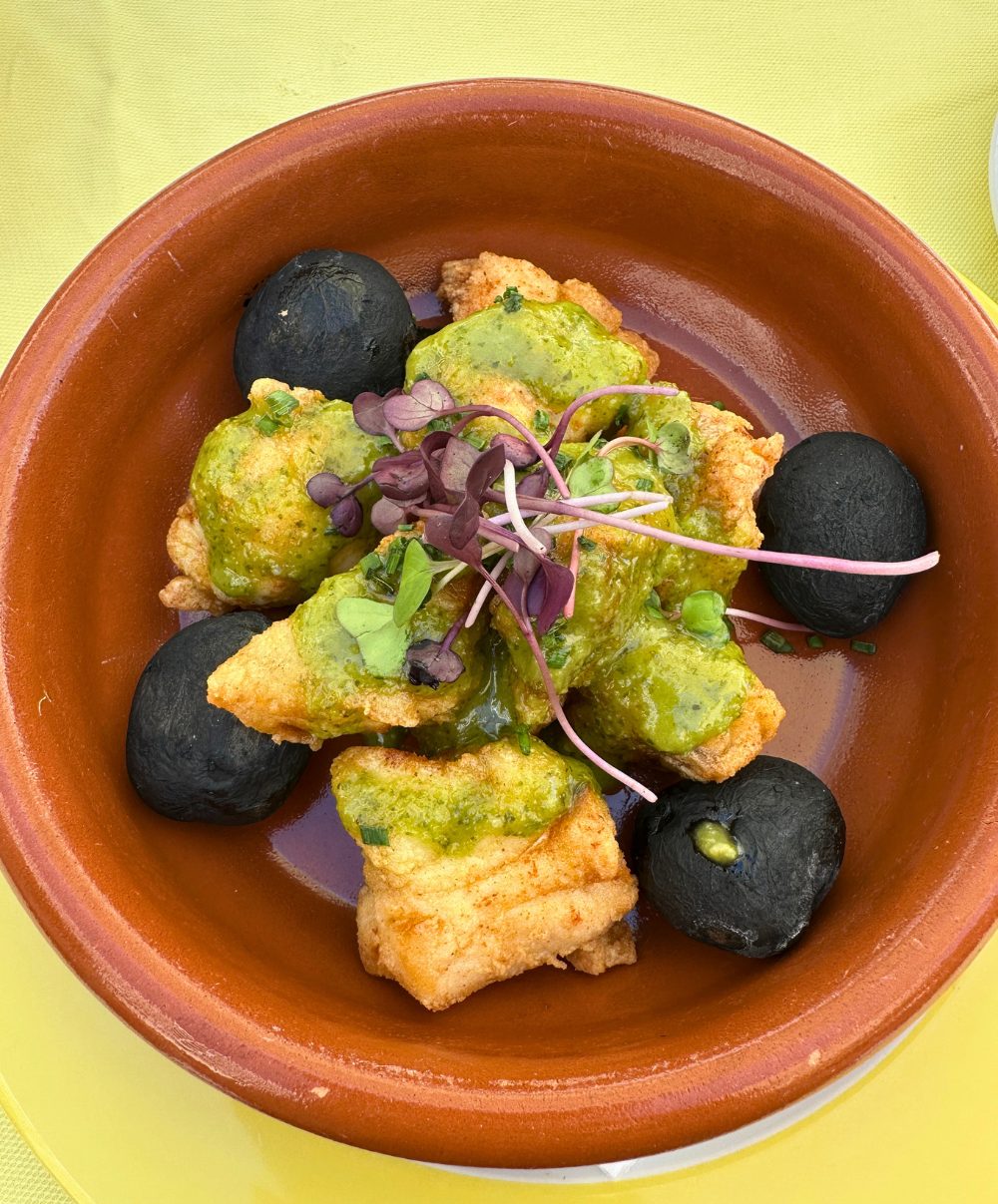
Chunks of cherme (a kind of grouper) and traditional black Canarian potatoes
The trade winds that flow past the coast of Gran Canaria don’t just bring moisture to the island’s verdant north; they also helped make it an essential port of call during the Age of Exploration in the 15th to 17th centuries.
Sailors - including Christopher Columbus himself - stopped here on the voyages that brought new crops from Europe to the Americas and vice versa.
Some of Gran Canaria’s most distinctive foods are a result of that so-called Columbian Exchange, while the island’s proximity to Africa also playing a role. Its original inhabitants were Amazigh (Berber) tribespeople, who arrived over 1,000 years before the island’s Castilian conquest in the 15th century.
Today, those influences still shape what you’ll find in the markets and on the table - in ingredients that travelled across oceans, and in dishes that have been adapted and passed down over generations.
Looking for restaurant recommendations? Check out Where to eat in Gran Canaria for authentic local cuisine.
Papas arrugadas
As the Canary Islands were one of the first places outside the New World to grow potatoes, it’s fitting that one of the archipelago’s most well-known dishes stars the humble spud.
Translated as “wrinkly potatoes”, this dish has a strong claim to being the most popular food across the islands as a whole. You’ll see it on menus as both a side dish - it’s especially good with fish - and as a starter or tapa.
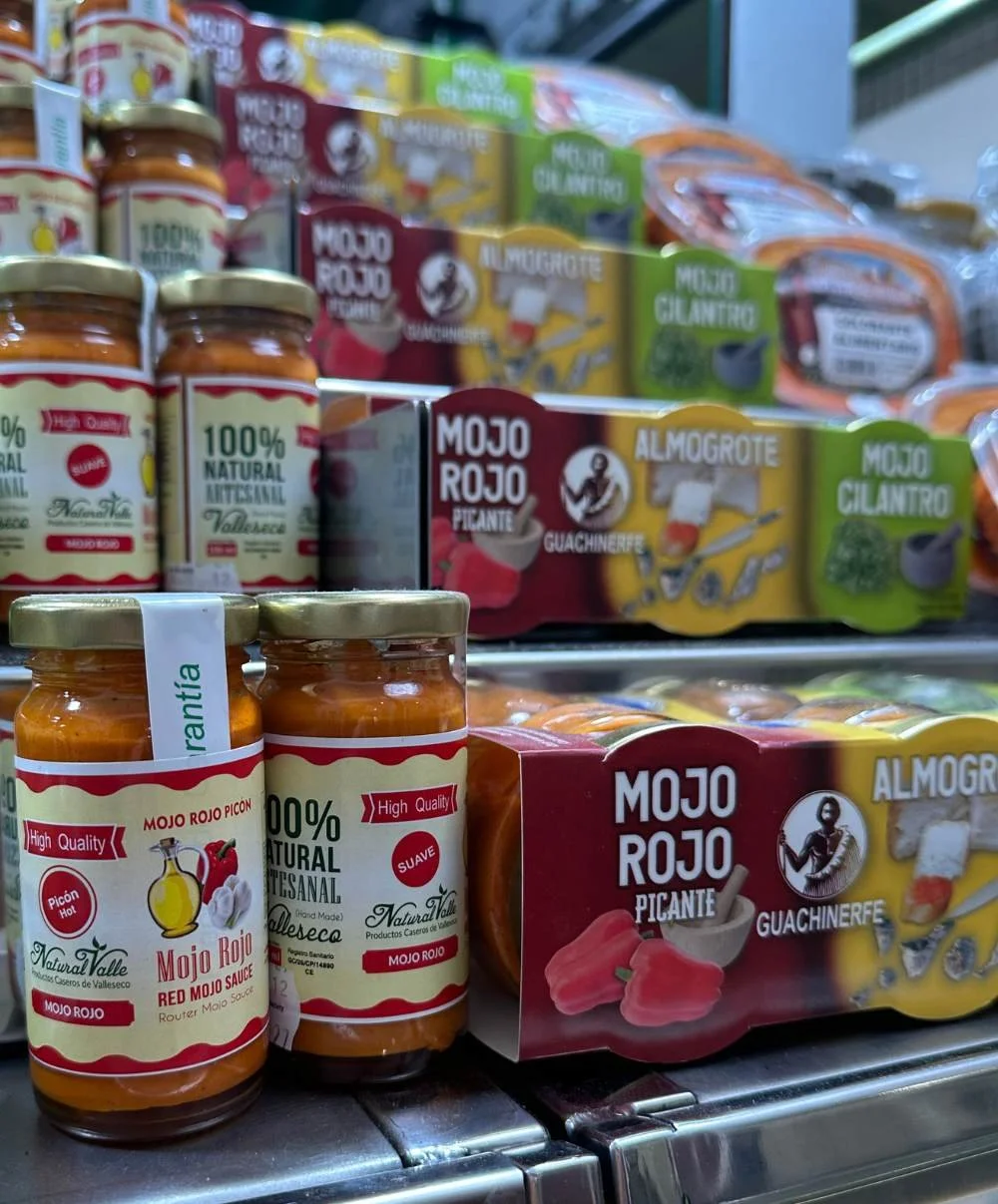
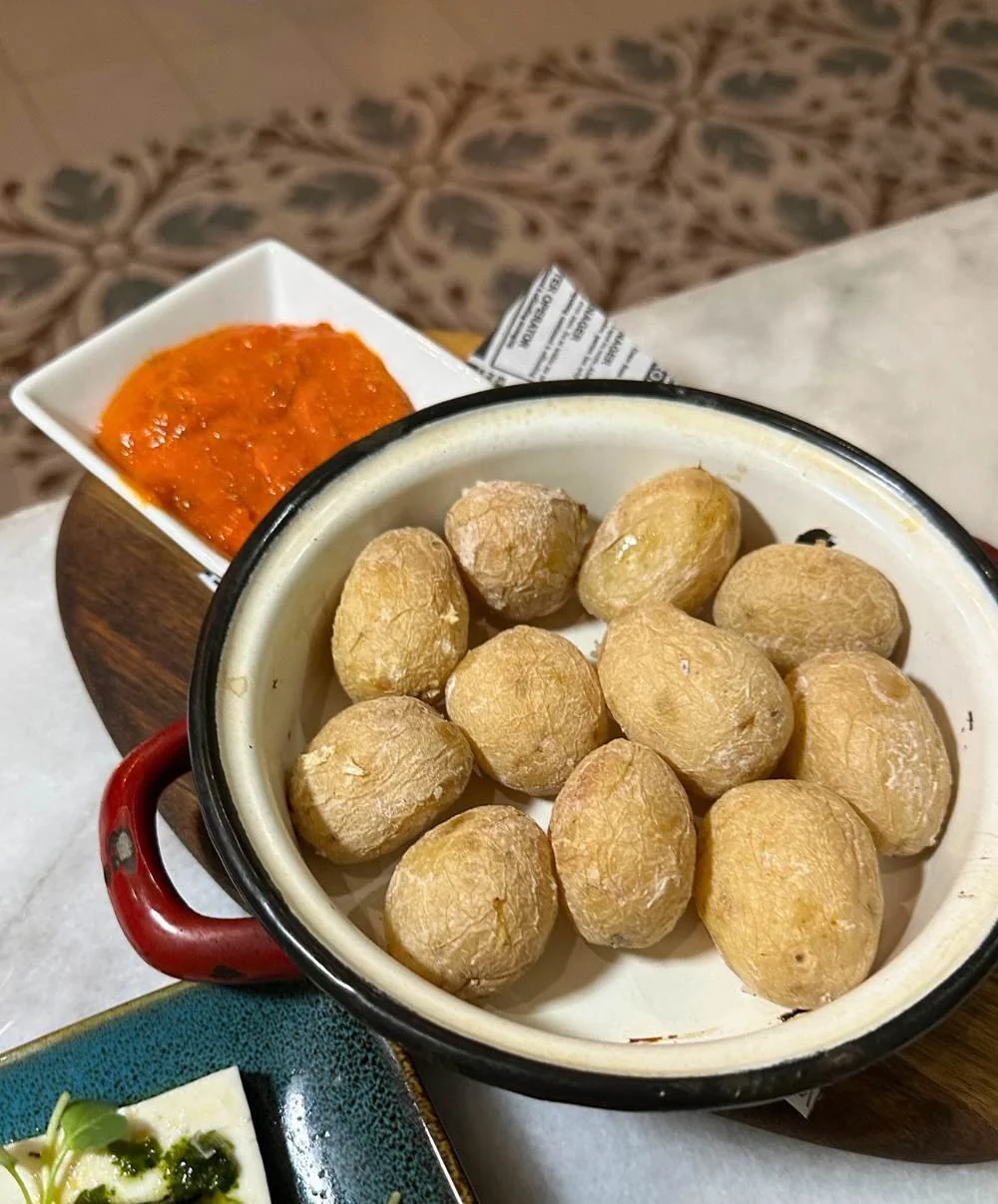
Boiled in heavily salted water until their skin wrinkles, these small round potatoes usually come with spicy mojo rojo picón (a sauce made with local peppers) and/or green mojo verde (coriander-based). The contrast of textures and flavours and the generous dusting of salt all help to make this local classic very moreish indeed.
Gofio
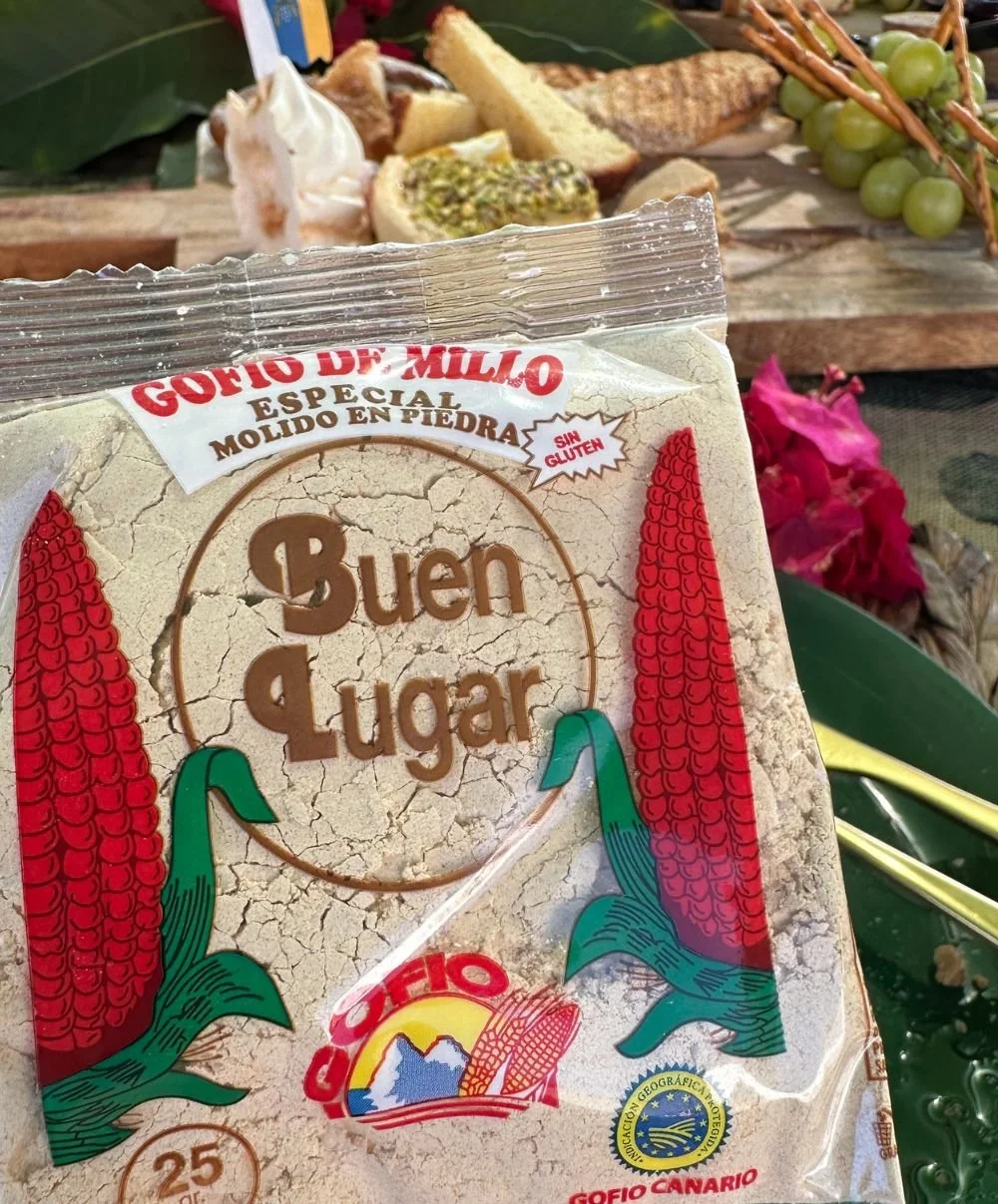
Made from toasted cereals ground into a fine powder, gofio is a staple of the Canarian diet that dates from prehispanic times. The archipelago’s indigenous peoples ground toasted barley by hand using stones, and stone-milling of gofio is still practiced today, albeit on a more industrial scale, and often using corn.
This versatile ingredient gets added to both sweet and savoury dishes as a thickener and even stirred into drinks to give them added nutritional heft.
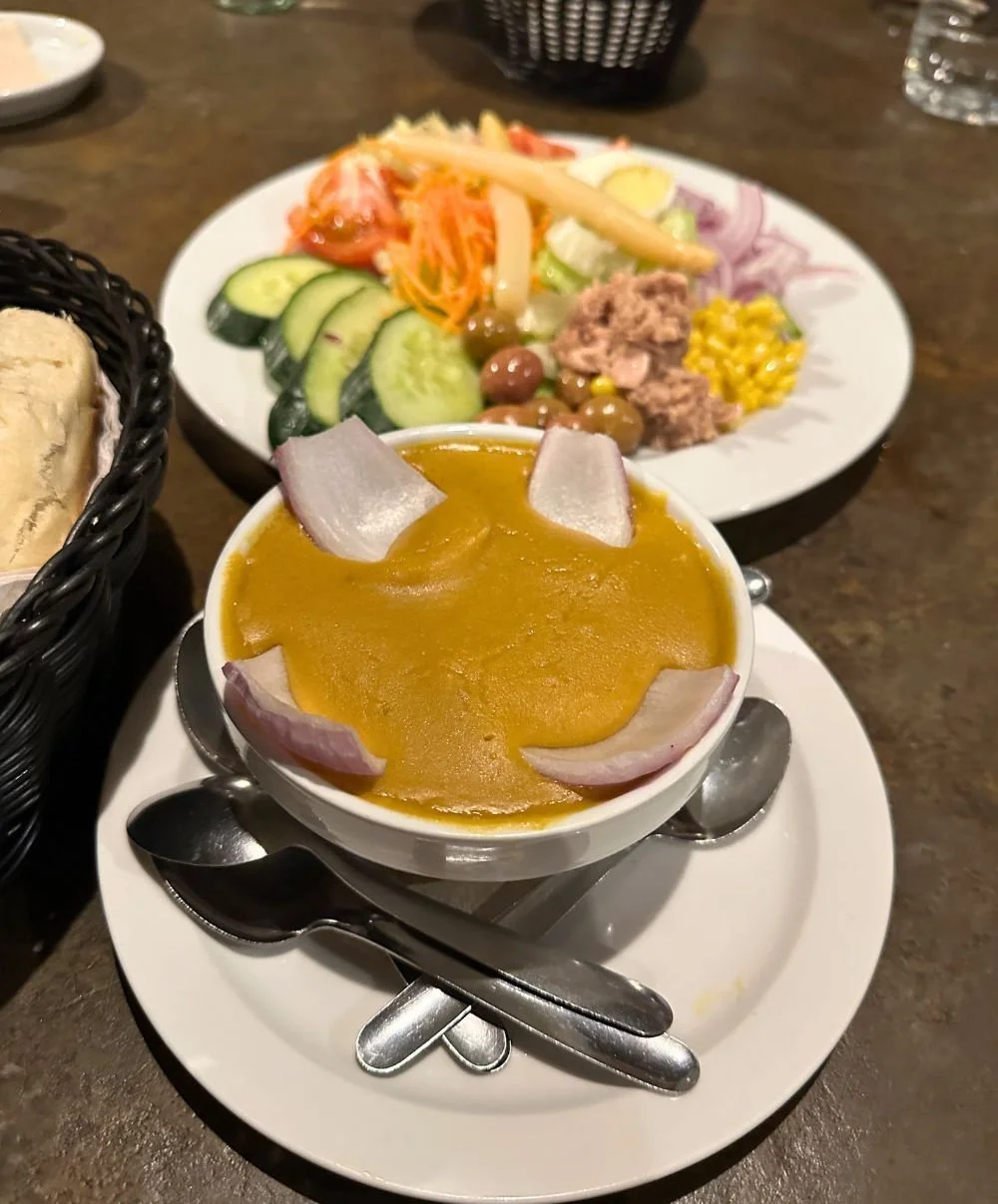
One of its most popular preparations is the dish gofio escaldado, where it’s made into a smooth puree with fish or meat stock and spices, and served with slices of raw red onion that act as edible spoons to scoop it up. In both flavour and texture, it’s not unlike a mild lentil curry.
Ropa vieja
Canarian cuisine isn’t short on hearty stews, and ropa vieja (old clothes) is one of the favourites. The name may come from the way it uses up leftover ingredients, or for the ragged appearance of the meat in the stew.
It seems there’s no canonical way of making ropa vieja - it depends on what you have to hand - but the typical base is a tomatoey meat stew with chickpeas and sometimes potato. Interestingly, the dish also played a role in transatlantic exchange. Legend has it that colonists from the Canary Islands brought it to Cuba, where it became the national dish.
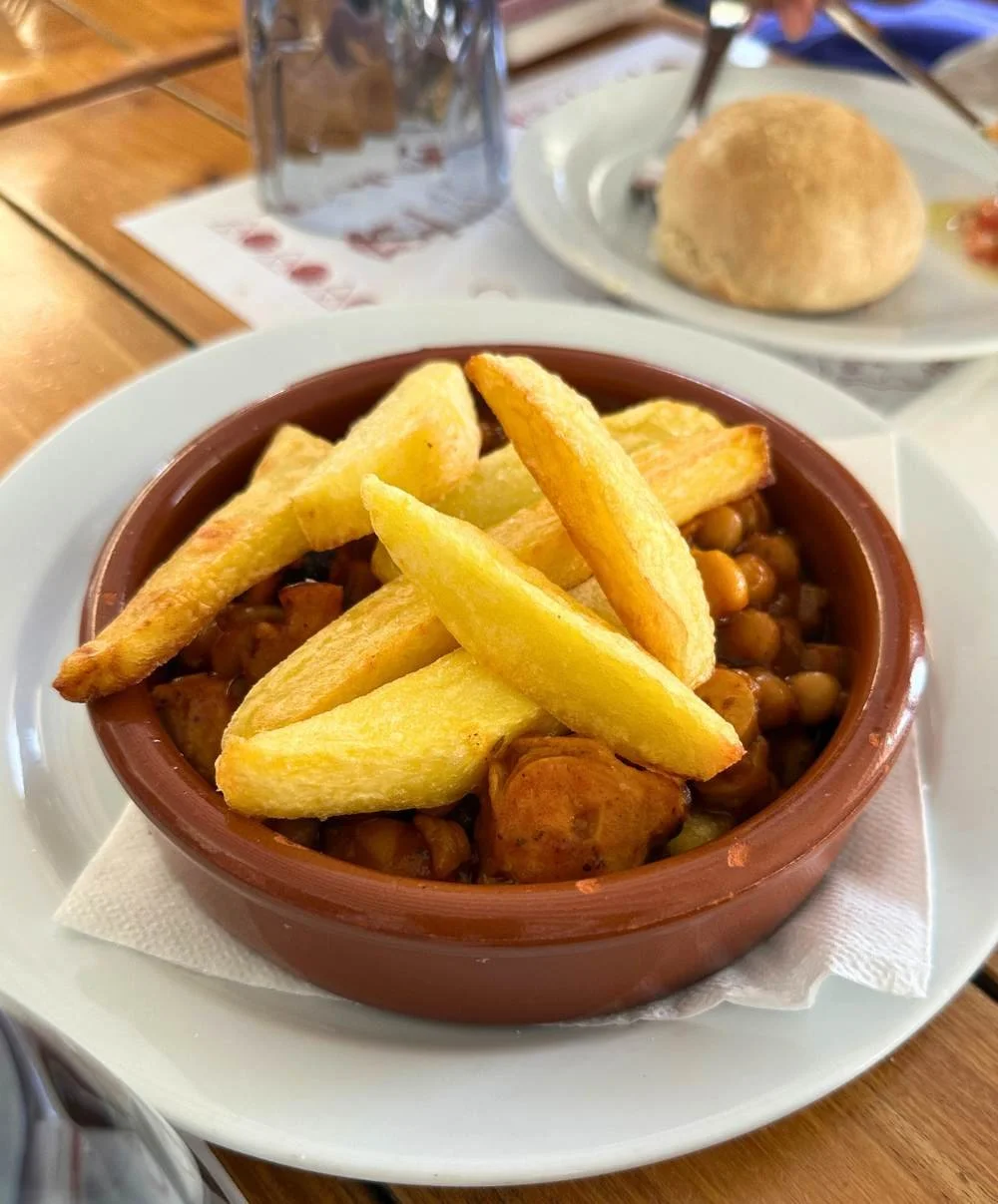
A plate of octopus ropa vieja at the restaurant Patio Canario in Puerto de Mogán
What intrigues me about this origin story is that the stew contains tomatoes, themselves an import from the New World - making it a dish brought by colonisers that wouldn’t have existed without colonisation.
Chorizo de Teror
If the two previous foods are from the Canary Islands as a whole, this one is specifically Gran Canarian.
Teror is a small town in the island’s green north, and a site of great spiritual significance. Its basilica is home to the figure of La Virgen del Pino, patron saint of the Canary Islands, and every September, pilgrims arrive here on foot to honour her. The classic pilgrim’s snack is a bocadillo (sandwich) filled with the town’s famous chorizo, a soft, spreadable version of that classic Spanish sausage.
For a truly local accompaniment, do what the pilgrims do and pair it with a can of strawberry-flavoured Clipper. This Canarian soft drink is named after the 19th-century sailing boats that were used in maritime trading (note the little stylised ship on the can).
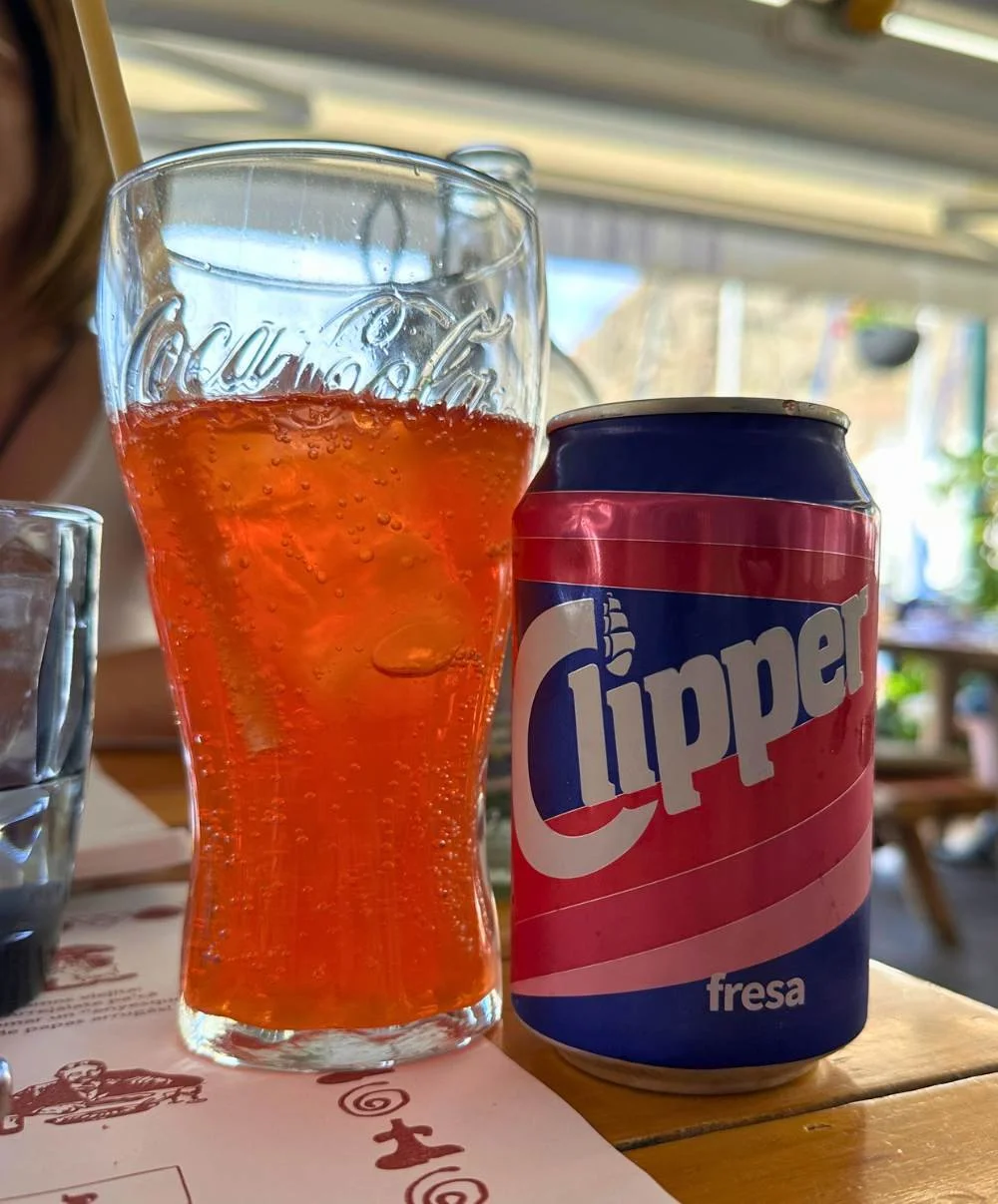
Clipper de fresa: pleasingly fluorescent
Chorizo de Teror is widely available across the island, though you can go straight to the source and buy it from Teror’s traditional Sunday street market.
Artisan cheeses
Available fresh, semi-fresh or cured, Gran Canaria’s cheeses made from cow, sheep and goat milk are one of the great delights of the island’s cuisine.
Perhaps the most famous is Flor de Guía. This creamy, aromatic cheese is made predominantly from sheep’s milk and has DOP status. It’s also vegetarian, as it’s made with natural rennet from the flower of a thistle that grows on the island.
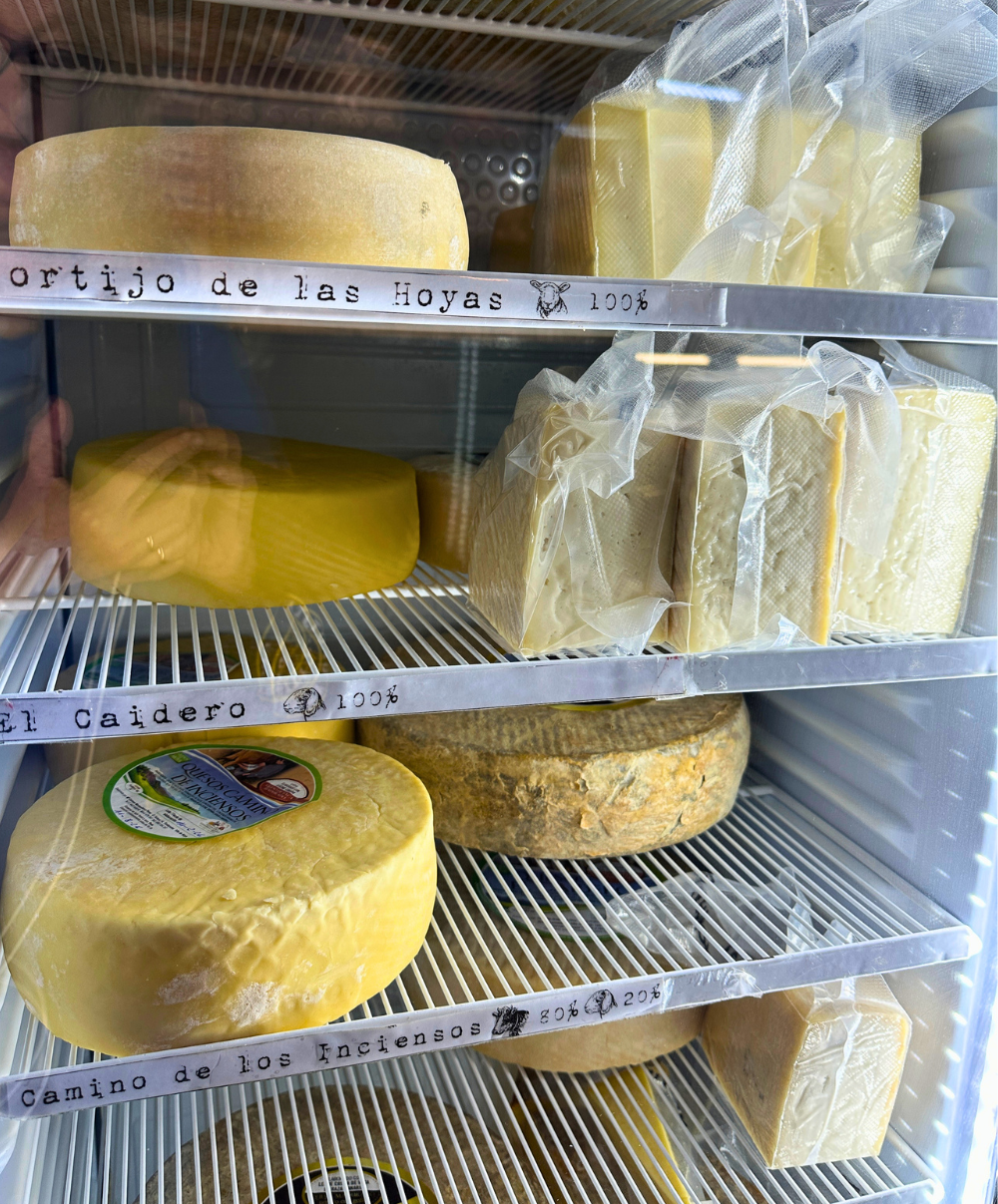
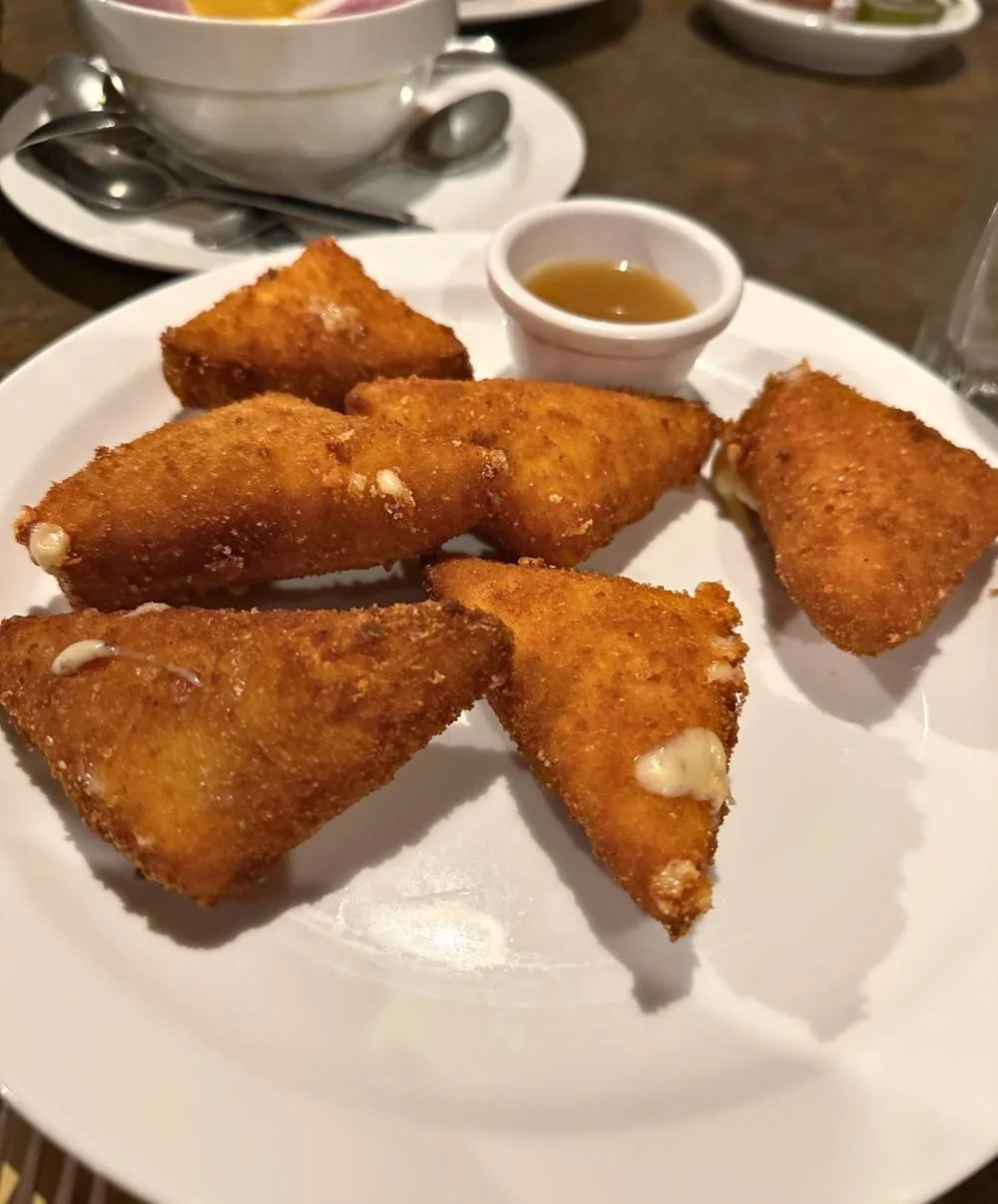
The island’s cheeses are particularly delicious when paired with fruit sauces and conserves such as guava jam, or “honey” (actually molasses) made from local cane sugar. You’ll see wedges of fried or baked cheeses on restaurant menus as queso frito or queso asado, usually served with something sweet on the side or drizzled over the top
Tropical fruits
Banana, papaya, guava, citrus and mango are just some of the fruits that thrive in Gran Canaria’s warm climate, often on terraces cut into the volcanic slopes that you’ll see when driving around the island.
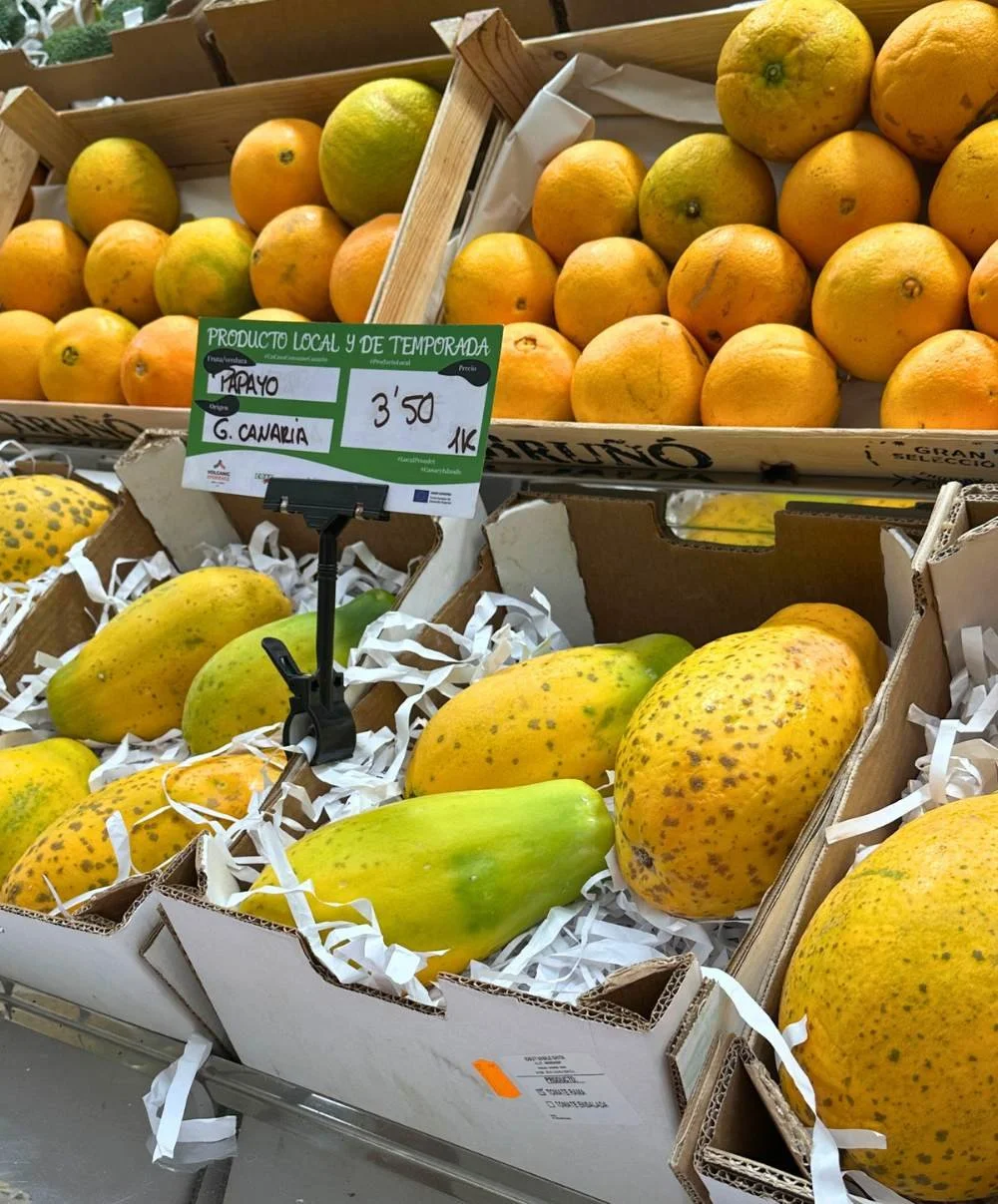
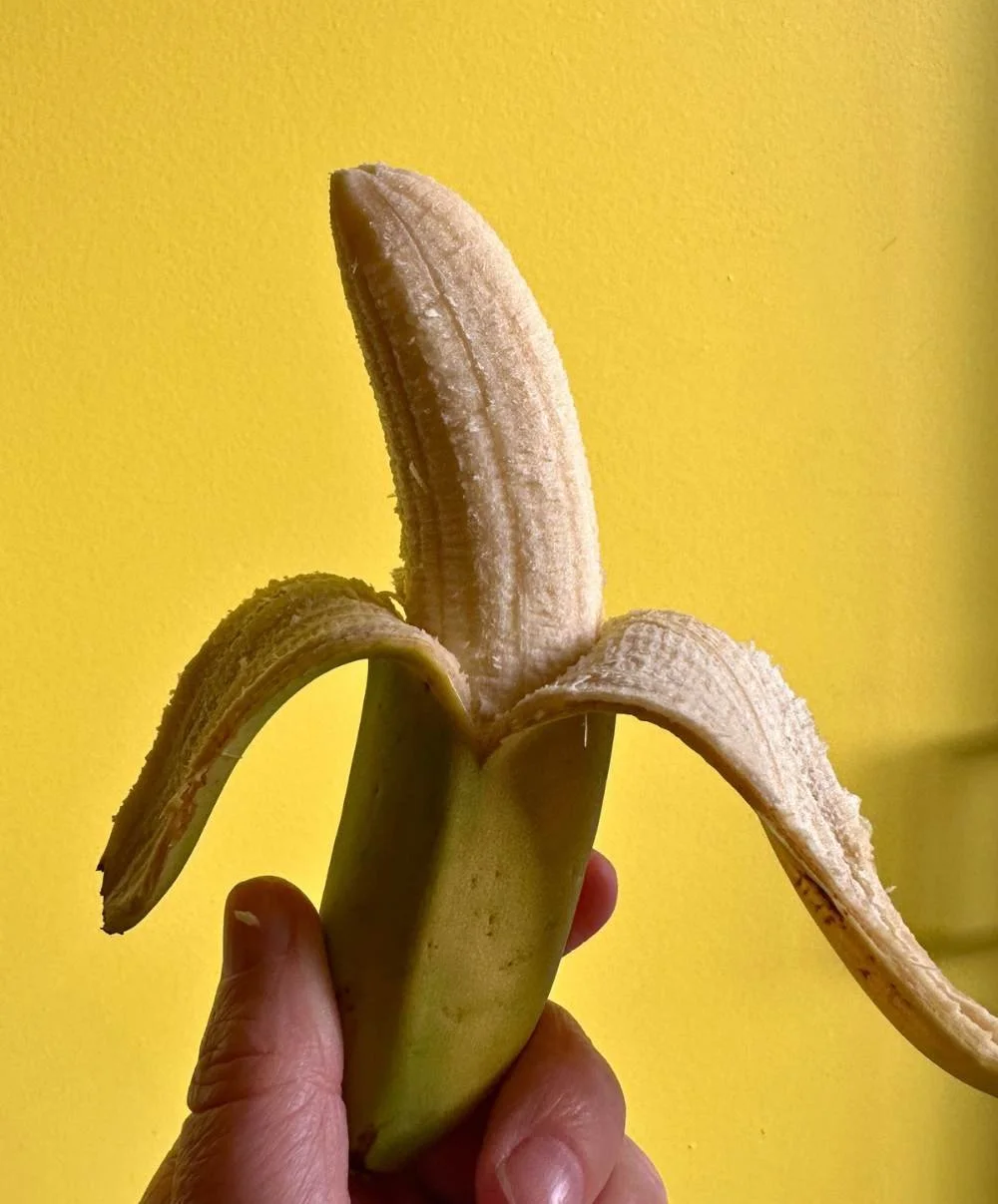
If there’s one fruit that’s synonymous with Gran Canaria, though, it’s the banana. Along with the classic plátano canario, the small and fragrant yellow-skinned variety that’s exported to mainland Spain and beyond, look out for unusual varieties like plátano rojo, a red-skinned variety with a slight raspberry flavour. You might see it from time to time in markets and fruterías.
Watercress stew
Traditionally foraged in springtime in the ravines of northern Gran Canaria, especially around Firgas (called “the town of water”), potaje de berros (watercress stew) is a classic example of a nutrition-packed food of necessity that’s become a nostalgic favourite.
I enjoyed an elevated version of this dish at restaurant La Colonial de Fontanales, where it was pureed into a velvety soup and topped with cochafiscos (kernels of toasted corn) and whipped egg white. See my list of where to eat in Gran Canaria for more on this restaurant and others.
Fish and seafood
As an island in the Atlantic, it’s no surprise that Gran Canaria is an excellent place to eat fish and seafood. Look out for cherne - Atlantic wreckfish, also known as stone bass or bass grouper (see photo at the top of this page). This firm, meaty white fish is usually served fried, baked or grilled.
Other local favourites include sama fish, a delicate-flavoured white fish often used in the traditional fish stew sancocho canario, and vieja (parrotfish). More familiar options - if you’re used to the fish restaurants of peninsular Spain - include octopus, anchovies and various kinds of tuna.
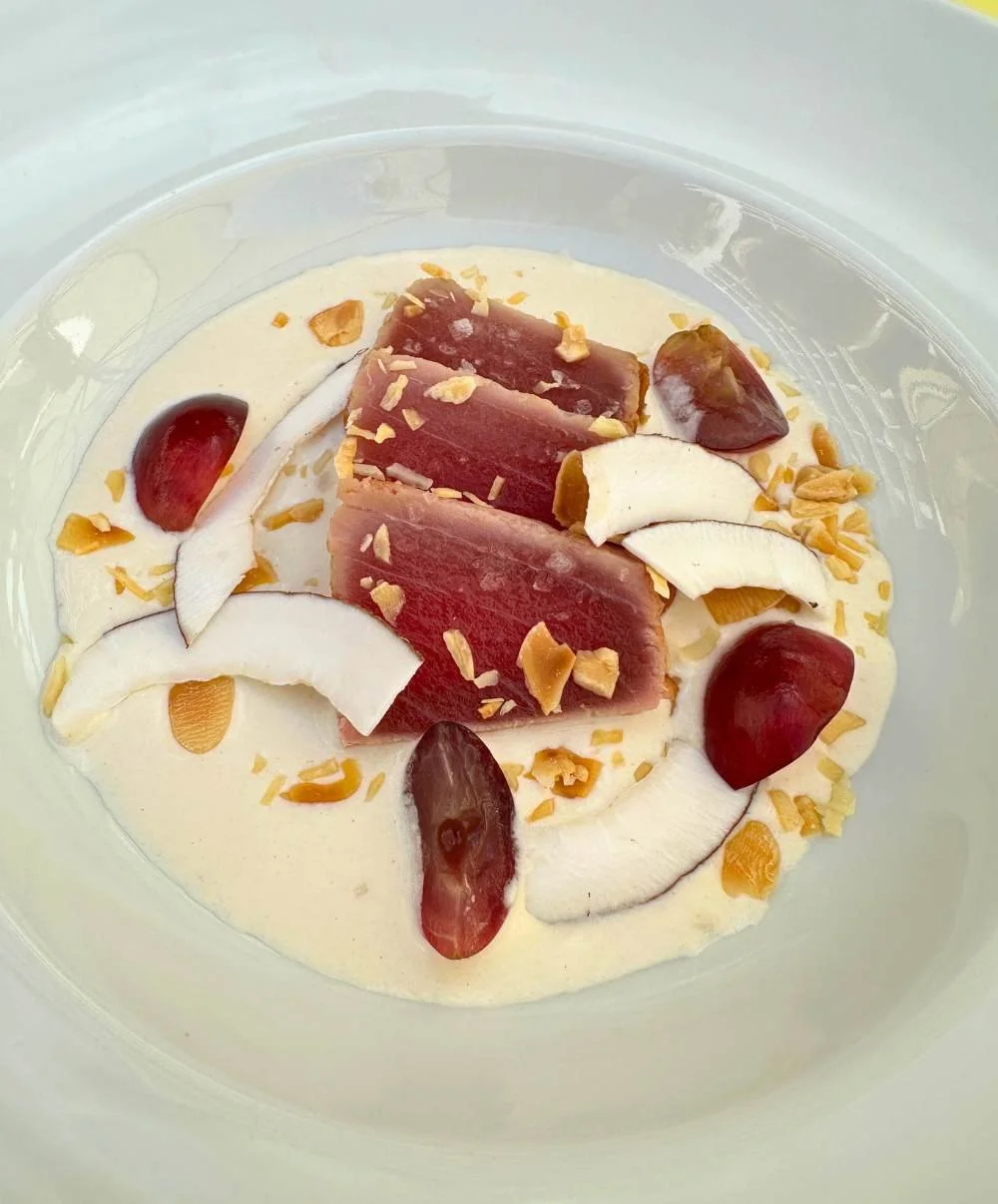
Tuna tataki with coconut, almonds and grapes, in the restaurant of the Seaside Palm Beach Hotel in Maspalomas
The pretty seaside town of Puerto de Mogán, while touristy, has many restaurants serving local fish prepared in traditional ways.
Polvito uruguayo
Although its name means “Uruguayan powder”, this popular dessert was created in Gran Canaria and is another example of the island’s ongoing culinary interchange with Latin America.
According to local media, it was invented in the 1980s by the Uruguayan mother of the owners of the restaurant Novillo Precoz in Las Palmas de Gran Canaria. Usually served layered and in a glass, the dessert includes crumbled Maria biscuits (similar to UK rich tea biscuits and US graham crackers), suspiros de Moya meringues, dulce de leche, and cream.
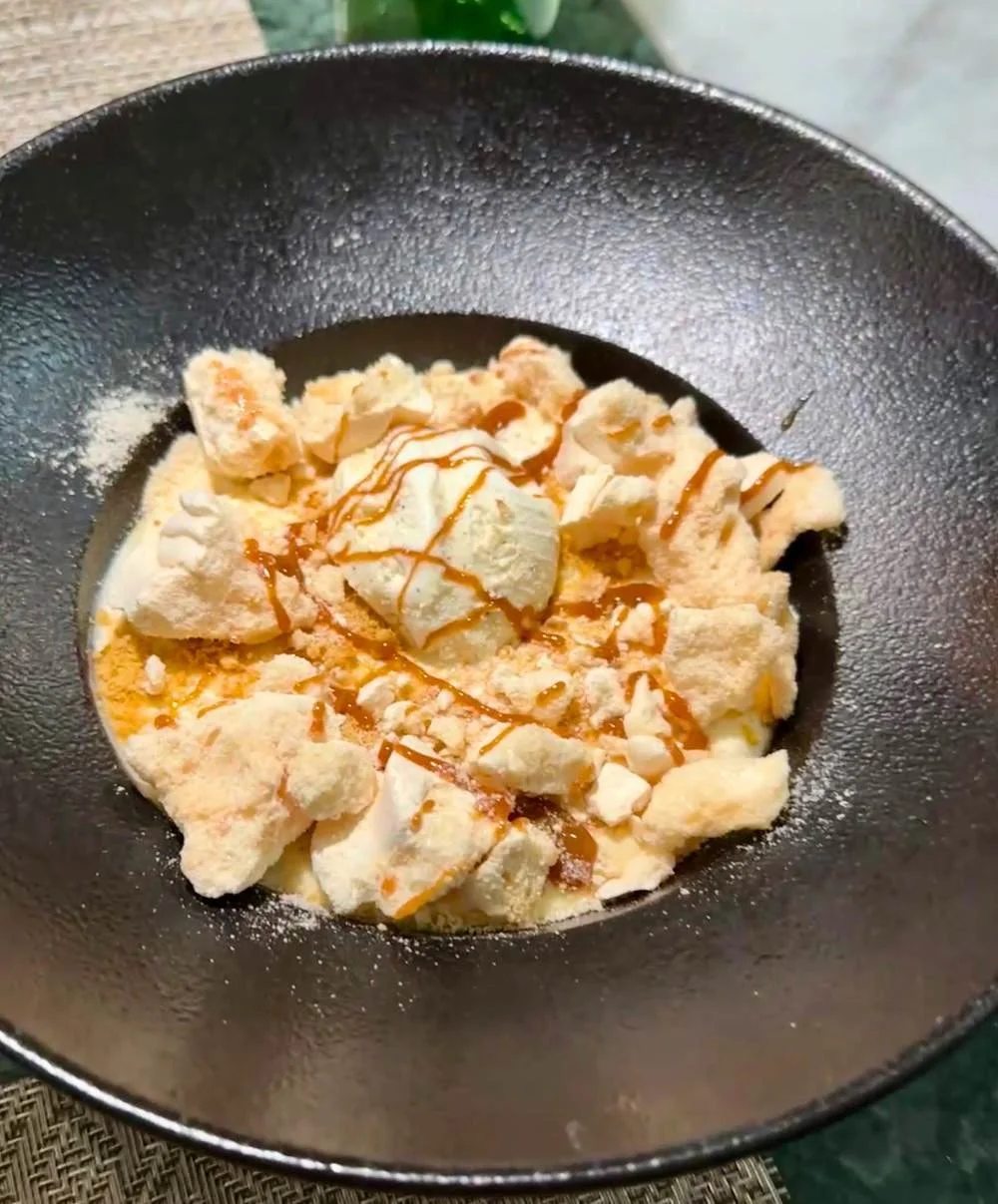
A “deconstructed” version of polvito uruguayo, served in the restaurant of Hotel Emblematic Agáldar in Gáldar
Layered coffees
I couldn’t end without a salute to what became one of my favourite beverages on the island. Leche y leche (milk and milk) is a coffee drink served with both foamed regular milk and sweetened condensed milk, which sits in a creamy band along the bottom of the glass. As a mid-morning pick-me-up, it’s hard to beat.
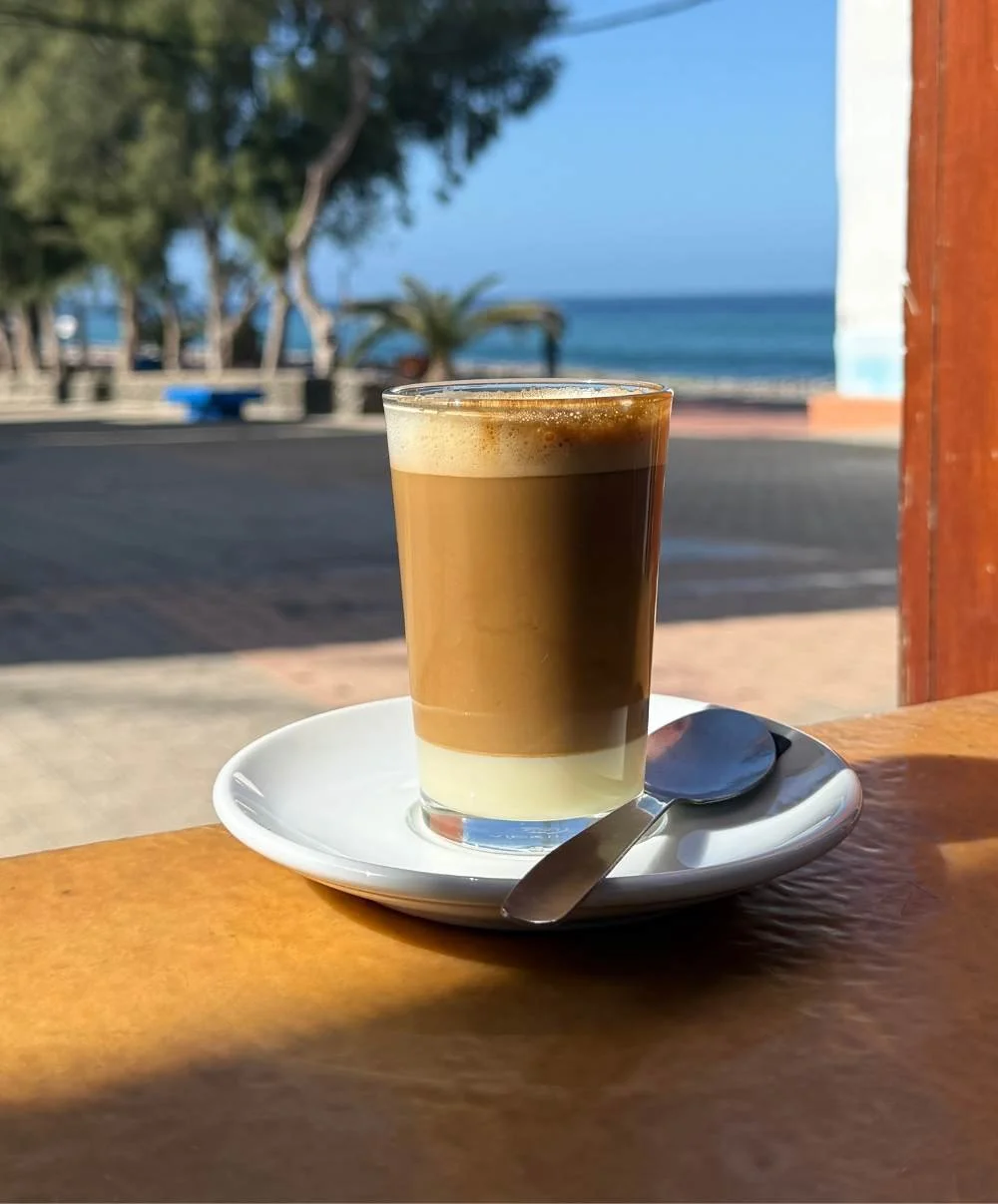
Leche y leche in the sun at La Playa de La Aldea
An alcoholic version of this, called a barraquito, is widely available in Gran Canaria, although it’s more closely associated with neighbouring Tenerife.
I travelled to Gran Canaria on a press trip hosted by Turismo de Gran Canaria. There was no obligation to post, and all opinions are my own.