
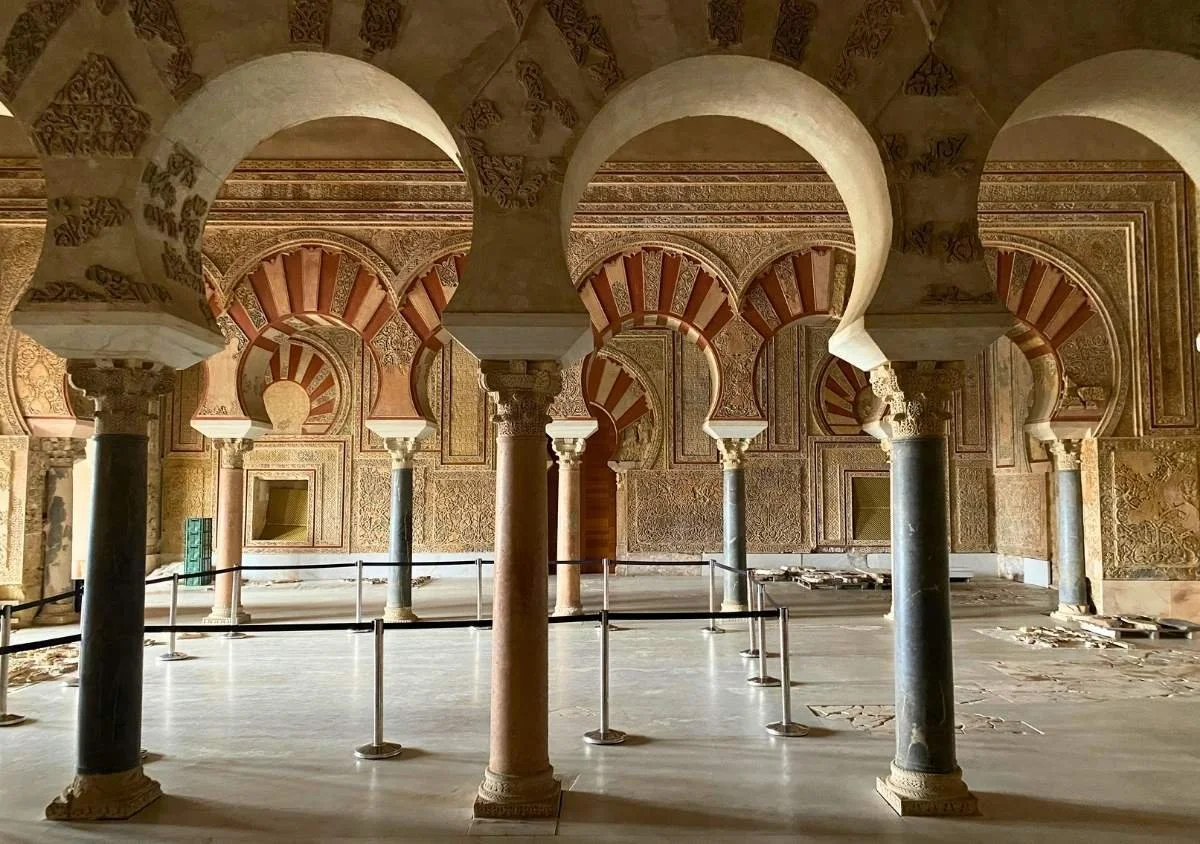
The Salón Rico, Medina Azahara. Photo © Amy Macpherson
This post may contain affiliate links, which means I may earn a small commission if you book or buy through them, at no extra cost to you. Thanks for your support!
In this article:
A brief history of Medina Azahara
Is Medina Azahara worth visiting?
What you’ll see on your visit
The Salón Rico: Medina Azahara's hidden highlight
Getting to Medina Azahara from Córdoba
Frequently asked questions
Medina Azahara is one of the most remarkable archaeological sites in Spain. Built during the Caliphate of Córdoba, when the Umayyad dynasty ruled over al-Andalus (Islamic Spain), this fortified palace-city stood for just 70 years before it was destroyed in a civil war.
In that brief period, its fame spread across the Mediterranean and beyond, while its workshops produced beautiful luxury goods that can still be seen in museums around the world.
Located just 8km from the centre of Córdoba, Medina Azahara is surprisingly overlooked by many visitors to the city. I've visited twice, and in this guide I'll explain everything you need to know to plan your trip, including how to visit the spectacular Salón Rico (Rich Hall), which can only be accessed on specific guided tours.
A brief history of Medina Azahara
The city was founded in 936 AD by Abd al-Rahman III. A few years earlier, he had proclaimed himself caliph, a title that made him both a political and religious leader. In doing so, he established the Caliphate of Córdoba, an independent state that rivalled the powerful Abbasid Caliphate based in modern-day Iraq.
To reinforce the prestige and power of his new realm, Abd al-Rahman III commissioned an entirely new palace-city in the foothills of the Sierra Morena. Known as Madinat al-Zahra (the “shining city" in Arabic), it became the political and administrative centre of the caliphate, housing government offices, reception halls, gardens, workshops, the royal mint, and residences.
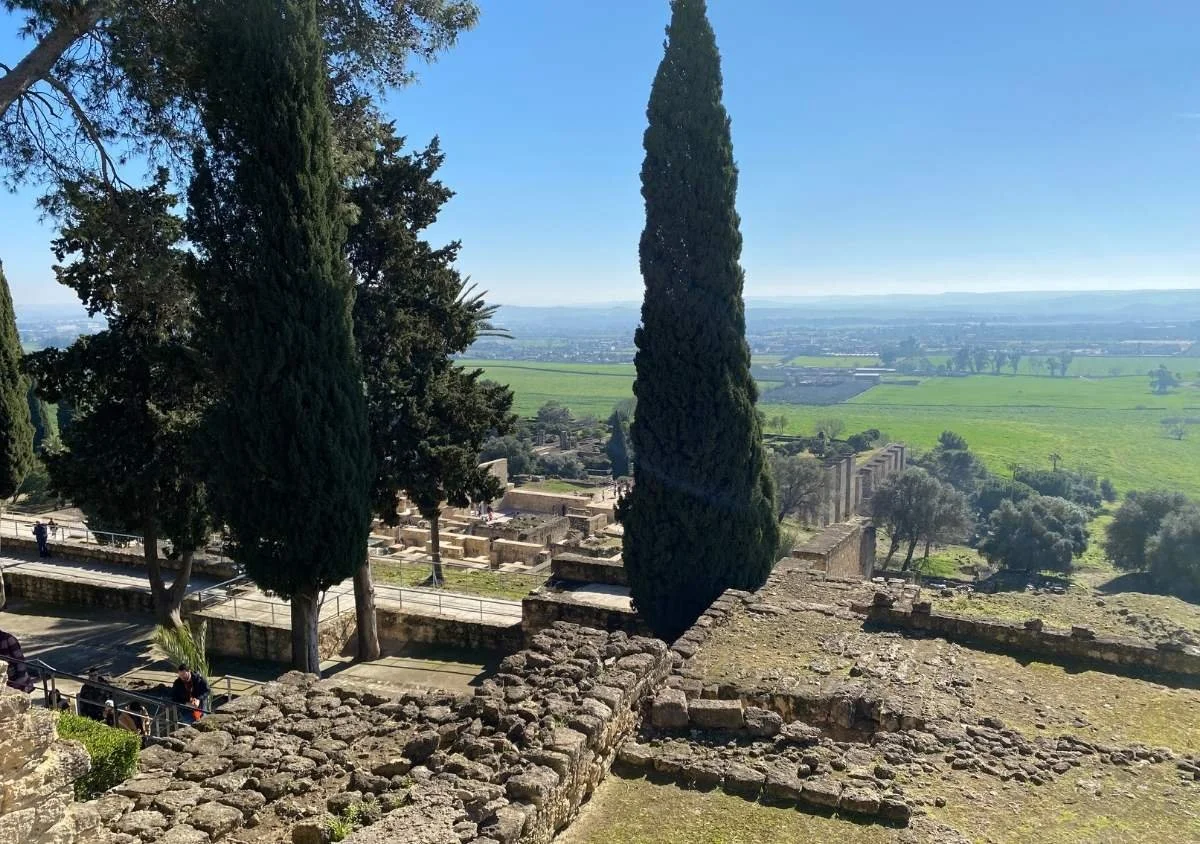
The archaeological site of Medina Azahara. Photo © Amy Macpherson
(A quick note on language - I’ll be using the Spanish name, Medina Azahara, throughout this article).
At that time, Córdoba was one of the largest and most sophisticated urban centres in Europe, and Medina Azahara was designed to impress. Ambassadors from across the medieval Mediterranean were received here.
What happened to Medina Azahara?
The city's fortunes were closely tied to those of the Caliphate of Córdoba itself. In the early 11th century, a succession crisis triggered a civil war known as the Fitna of al-Andalus. Medina Azahara was looted and abandoned, and as the caliphate collapsed, the palace-city was left to ruin.
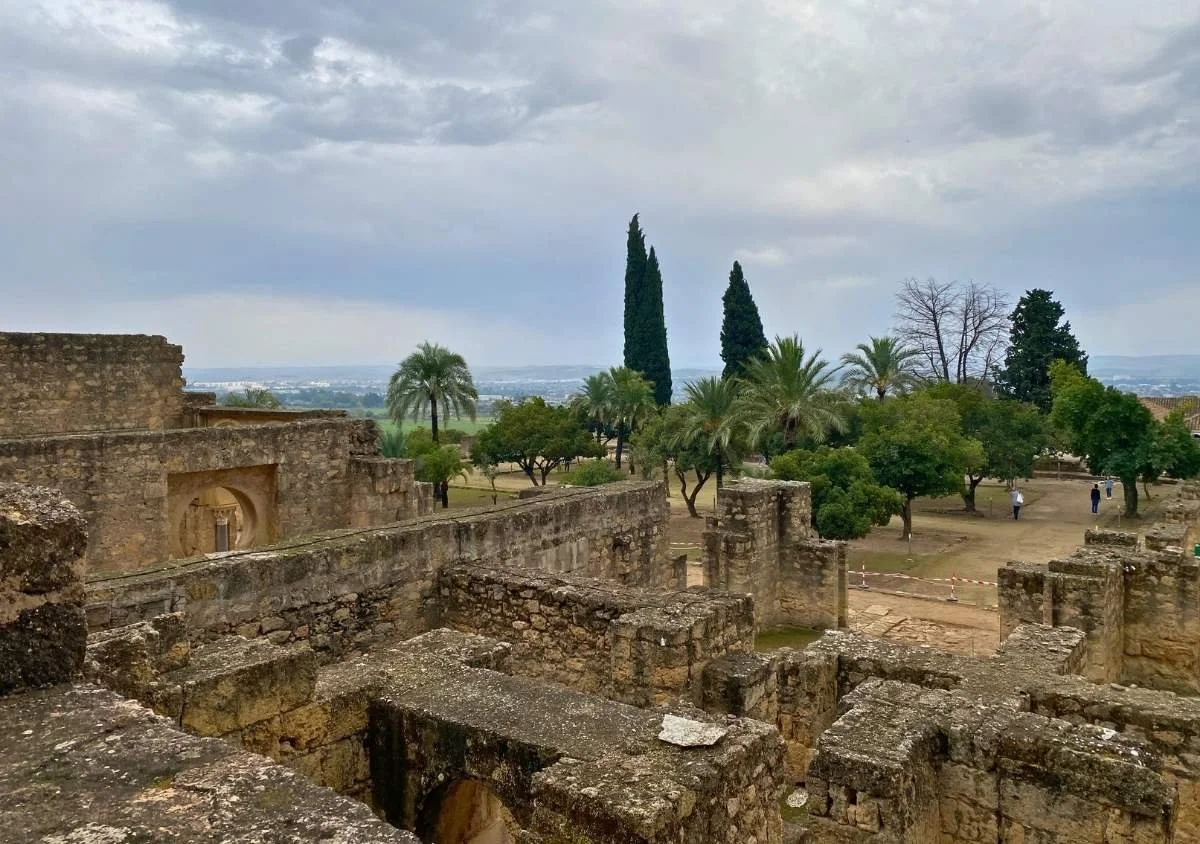
A view of the Alcázar area. Photo © Amy Macpherson
Over the following centuries, many of its stones were reused in other buildings across the region, while the rest of the city gradually disappeared beneath the earth. Archaeological excavations only began in 1911 and continue today. In fact, only a small part of the original city has been uncovered so far.
Today, Medina Azahara is recognised as one of the most important archaeological sites in Spain and was designated a UNESCO World Heritage Site in 2018.
Is Medina Azahara worth visiting?
If you’re at all interested in history and archaeology, I would say yes - Medina Azahara is 100% worth a visit, either as part of an Andalusian road trip or as a half-day excursion from Córdoba.
As well as the ruins of the city, you can explore the extensive on-site museum, which has materials in Spanish and English to help you make sense of the archaeological site. Visiting here also gave me a much deeper understanding of the broader history of al-Andalus.
The video below (which has English subtitles) is well worth a watch before your visit, as it includes visualisations of what the city looked like in its heyday.
What you'll see on your visit
I recommend visiting the aforementioned museum and visitor centre first - they’re in a building right next to the main car park. After this, you’ll need to get the regular shuttle bus (which leaves every 15-20 mins) from the parking lot to the archaeological site itself, located further up the hill.

One of the shuttle buses which takes visitors to and from the archaeological site (not to be confused with the yellow “Madinat al-Zahra” -branded bus which can be booked to and from the centre of Córdoba to the parking lot/museum).
The signposted walking route around the site starts at the highest point, with views over the ruins below and the surrounding farmland. From here, you’ll enter through the North Gate of the Alcázar (fortified palace), and pass the Upper Basilica, the central administrative hub of the city.
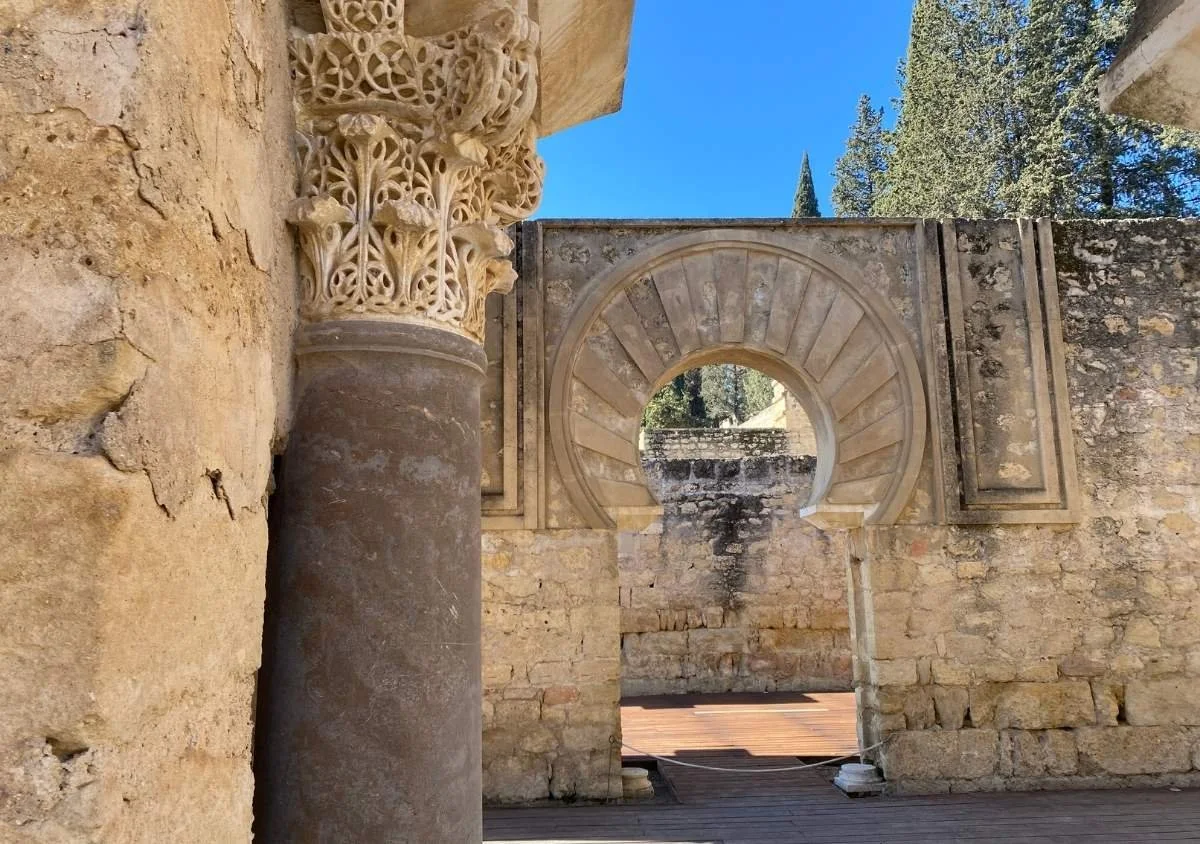
The Upper Basilica. Photo © Amy Macpherson
The path continues to the Great Portico, the ceremonial entrance to the Alcázar - an impressive series of arches that were once topped by a tower where the caliph could watch over manoeuvres on the parade grounds below.
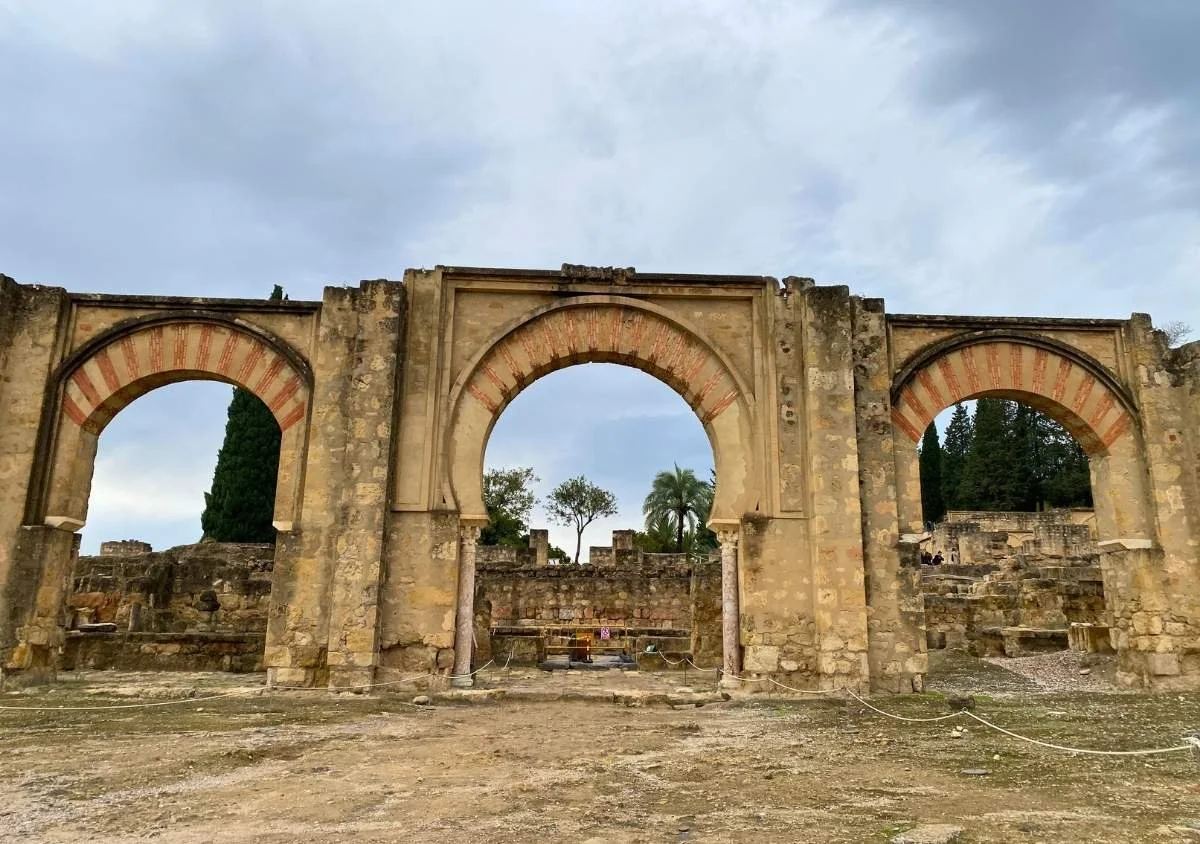
The Great Portico. Photo © Amy Macpherson
You’ll then loop back through the site, passing the royal stables and the House of Ya’far, official residence of the hayib (grand vizier, or prime minister). This is one of the most richly decorated parts of the site, with parts of its arches and walls covered with ornate carved stucco in plant motifs called atauriques.
Not all of the excavated parts of the Alcázar are visitable. The private residence of the caliph himself, known as the dar al-mulk (seat of power), is closed to the public while restoration work takes place. The site of the aljama (congregational mosque), which is located outside the walled precinct of the Alcázar, is also off-limits. However, you can get a closer look at it as part of the guided tours of the Salón Rico.
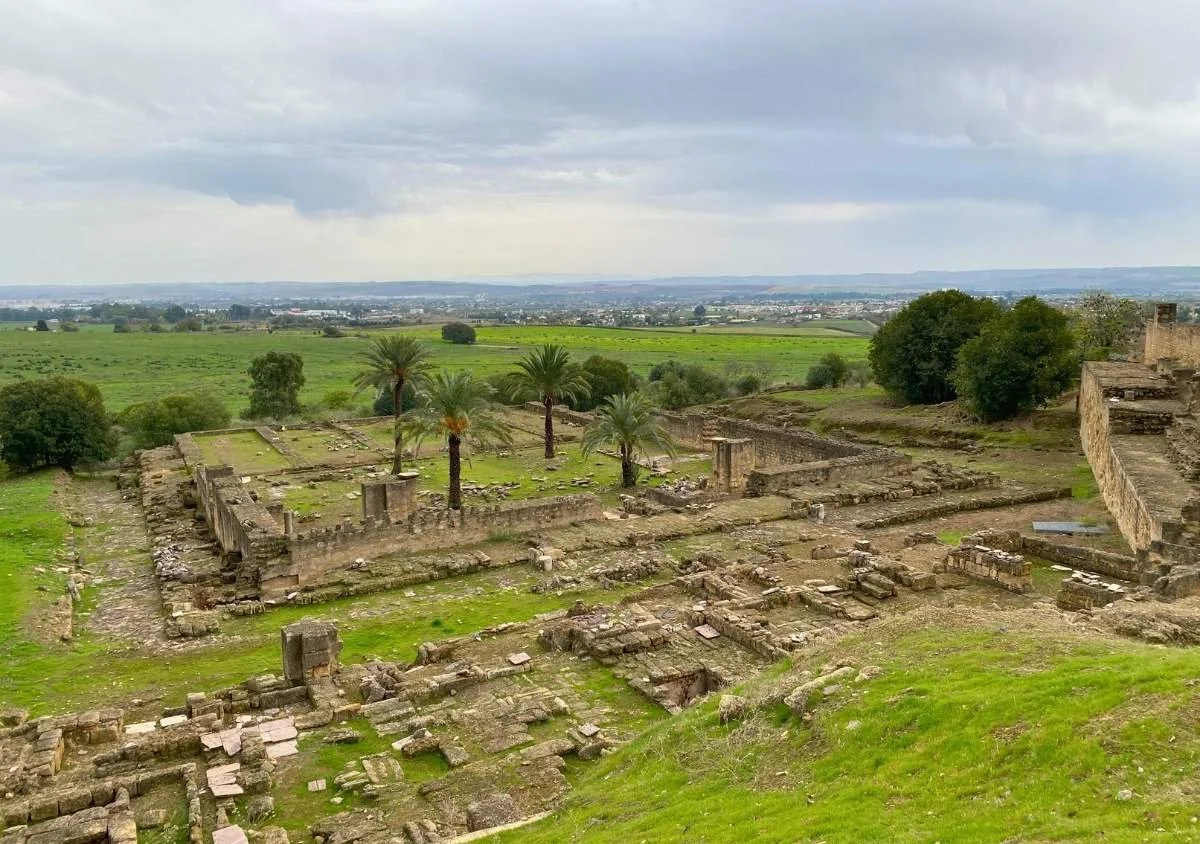
The aljama mosque, Medina Azahara. Photo © Amy Macpherson
The Salón Rico: Medina Azahara's hidden highlight
One spectacular part of Medina Azahara most visitors miss is the Salón Rico (Rich Hall), the ceremonial heart of the Alcázar, where the caliph would receive special guests such as ambassadors.
It’s the only “indoor” part of the site, and full of the distinctive red-and-white striped arches that are a signature motif of the Umayyad dynasty. It also has some incredibly detailed ataurique decoration on the walls and ornate marble capitals (the top part of columns) carved in the filigree “hornets’ nest” style that’s typical of the caliphal era.
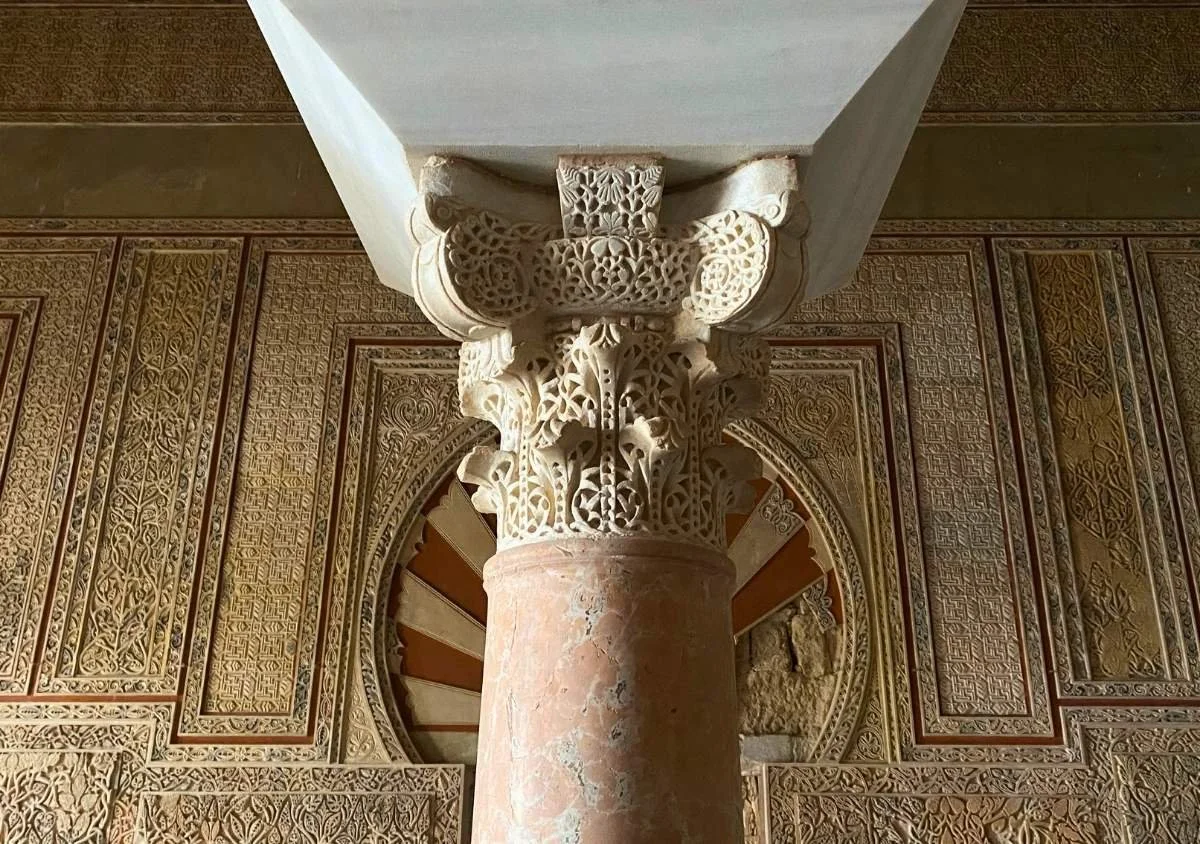
Carved capital and wall decorations in the Salón Rico. Photo © Amy Macpherson
The Salón Rico is currently undergoing restoration work, and access is restricted to certain times on weekends via a guided tour (free; in Spanish) which must be booked in advance via this website. In 2026, the tours run until mid-December.
How the guided tour of the Salón Rico works
Once you arrive at the Medina Azahara parking lot, you’ll first need to buy a ticket to the site and a ticket for the shuttle bus to get to the archaeological site, as neither of these are included in the pre-booked Salón Rico guided tour ticket. The tour meeting point is the Great Portico, not the entrance to the site, so make sure you’re there in plenty of time.
The tours are designed for adults and, as mentioned, they are in Spanish only. I would not recommend doing the tour if you don’t speak at least intermediate Spanish, as there are some safety instructions at the start since the area is undergoing construction work.
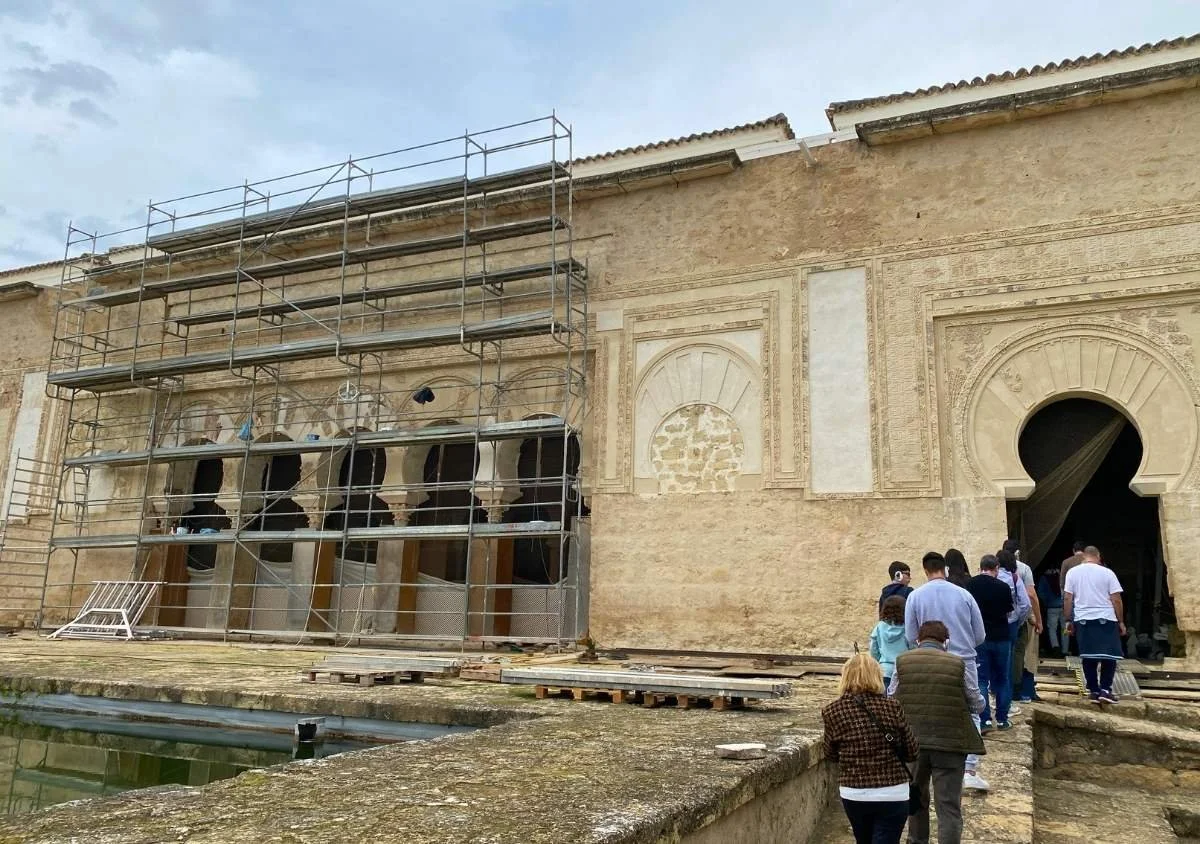
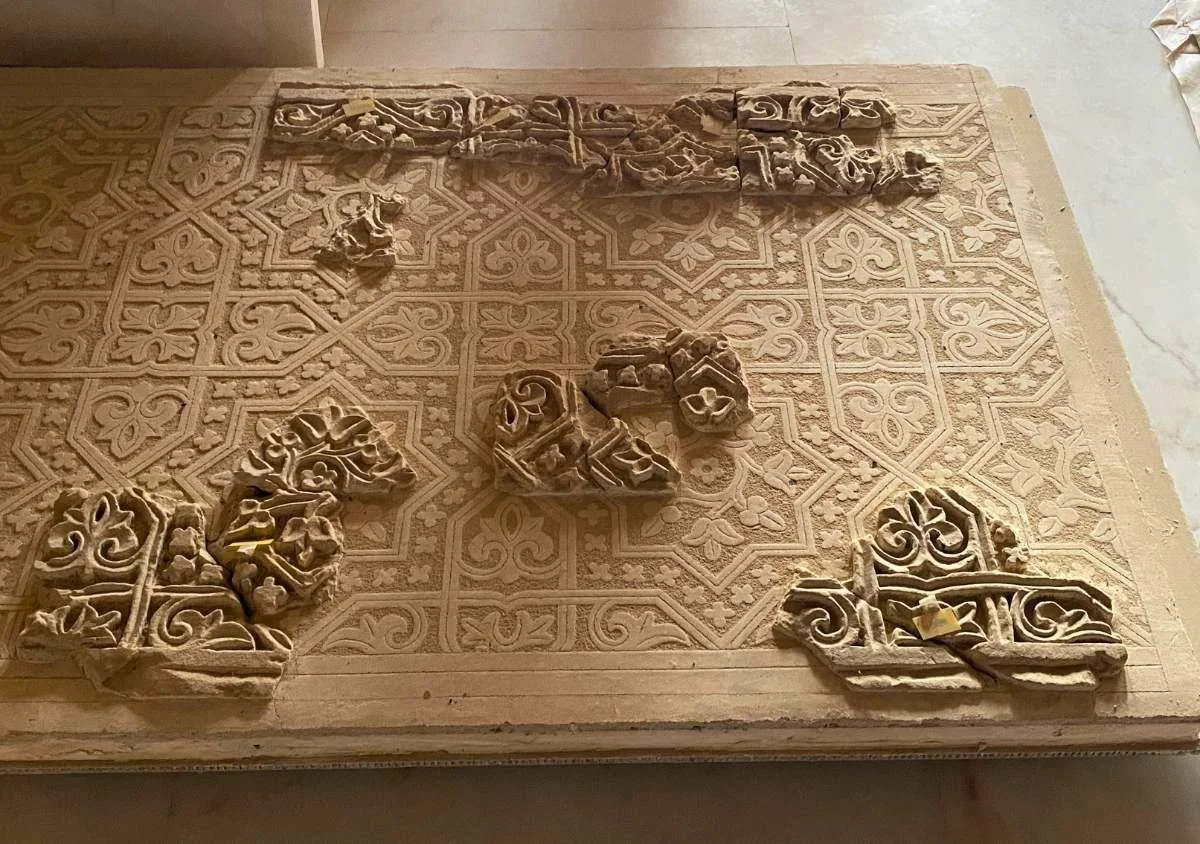
When I did the tour, it started with an introduction to the Upper Garden (the part of the site where the Salón Rico is located) and the site of the aljama mosque. We then went inside the Salón Rico, where we could see the work that restorers are doing to the rich surface decoration of ataurique plasterwork and marble. I absolutely loved having this look “behind the scenes”.
Getting to Medina Azahara from Córdoba
The first thing to know is that it’s not possible to drive directly to the ruins. You’ll first arrive at the parking lot of the visitor centre and museum, and from here there’s a regular shuttle bus to and from the archaeological site, 3km further up the hill.
If you’re not coming by car, the easiest way to get to and from Medina Azahara is to book a round trip on the dedicated “yellow bus” service from the city centre (adults €10 return, children €5). This also includes your ticket for the shuttle, which otherwise must be purchased onsite (€3 for the round trip, €1.50 children).
The only downside of the yellow bus in my view is the limited timetable - there are two departures from the city centre at 10am and 10:45am, with the option to return at 13:30 or 14:15. There is an additional evening service in the summer months when the site is open later. When planning your time onsite, remember to factor in the time for the shuttle bus - you may need to queue for 10-15 mins to get onto one.
As an alternative to the dedicated bus, you can also take the regular, municipal bus service for a couple of euros which will drop you off at the bus stop on the main road. From there, it’s a 10-minute walk along a narrow country road with no pavement to get to the visitor centre.
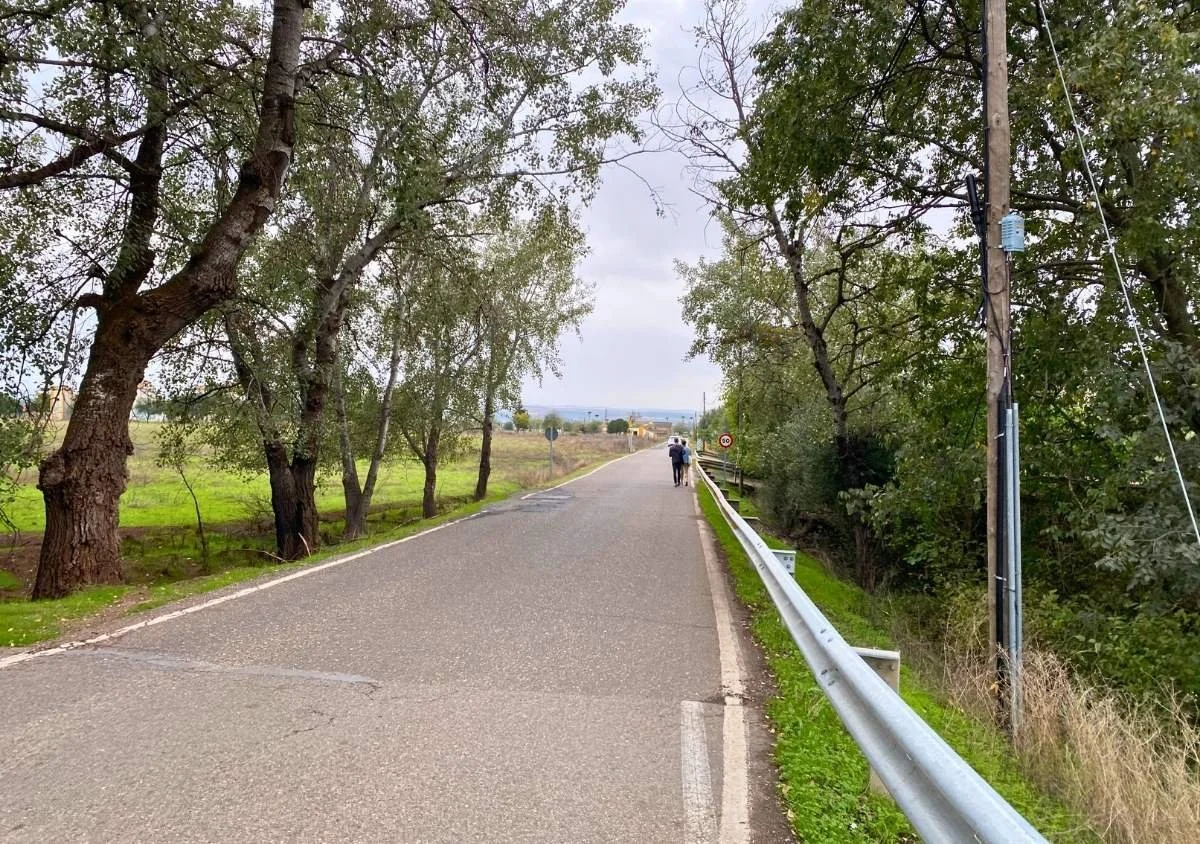
Take care walking from the bus stop to the museum/parking area
You can also take a taxi from Córdoba, but be aware that there’s a surcharge - although the journey is less than 10 minutes from Córdoba train station to the Madinat al-Zahra parking lot, when I took this option, it cost €21 - which is about double the cost of a regular metered trip.
So to sum up, these are the tickets you’ll need for your visit and how to get them:
Coming by car, taxi or public transport? Buy your ticket to the site in the museum when you arrive, and your round-trip ticket for the shuttle bus from the driver’s assistant who will be walking up and down the queue (you can pay by card).
Coming in the special Medina Azahara yellow bus? You just need to buy your ticket to the site in the museum when you arrive. Your bus ticket also gives you access to the shuttle - just show this to the driver when you board.
Taking a guided tour
If all the above sounds a bit like a complicated military operation (understandable!), the easiest option of all is to book a package tour with transport included. The other advantage of this approach is that you’ll also have a tour guide taking you around the site.
Book a guided tour on GetYourGuide
To organise a bespoke tour in either English or Spanish, I recommend the licensed tour guide and art historian Ángela Laguna. You can contact her directly via her Instagram.
Medina Azahara FAQ
-
Due to Cordoba’s infamous heat during the summer months, I recommend visiting here in autumn, winter or early spring, especially as there’s little in the way of shade in the outside parts of the site. Check my guide to the best time to visit Córdoba for more.
-
The opening hours vary according to the time of year. From March 21 to June 21, Medina Azahara is open from 9am-6pm Tues-Thurs, 9am-9pm Fri-Sat and 9am-3pm on Sundays, public holidays and the Mondays before public holidays. On regular Mondays it is closed.
From June 21 to September 20, there’s a closure of several hours in the hottest part of the day, and the site is open later in the evenings. Opening hours during this time are 9am-2pm and 7pm-midnight (this evening slot is for the archaeological site only) Tues-Sat, and 9am-3pm on Sundays, public holidays and Mondays before public holidays. On regular Mondays it is closed.
From September 21 to March 20, the opening hours are 9am-6pm Tues-Sat, and 9am-3pm on Sundays, public holidays and Mondays before public holidays. On regular Mondays it is closed.
Opening times may change, so always check the official Museums of Andalucia website before you visit.
-
Entry is free for European Union citizens, and residents of Spain (at least, this was the case when I visited - I just had to show my residents’ card). For everyone else it’s the bargain price of €1.50.
-
No - the official website says it’s not necessary to buy tickets to the site in advance unless you’re a group of 10 or more people. If you are planning on taking the dedicated yellow bus to and from Medina Azahara, though, I would recommend booking that in advance.
-
Allow at least two hours, ideally three, including waiting time for the shuttle to and from the archaeological site and time in the museum.
-
There is a free audioguide in Spanish, English and French as part of the app Espacios Cultur@ created by the Andalucian regional government. To save time, you can install this before your visit via the Apple App Store and the Google Play Store.
Find out the best times of year to visit this historic, flower-filled Andalucían city (and the months when you should probably avoid it!)