
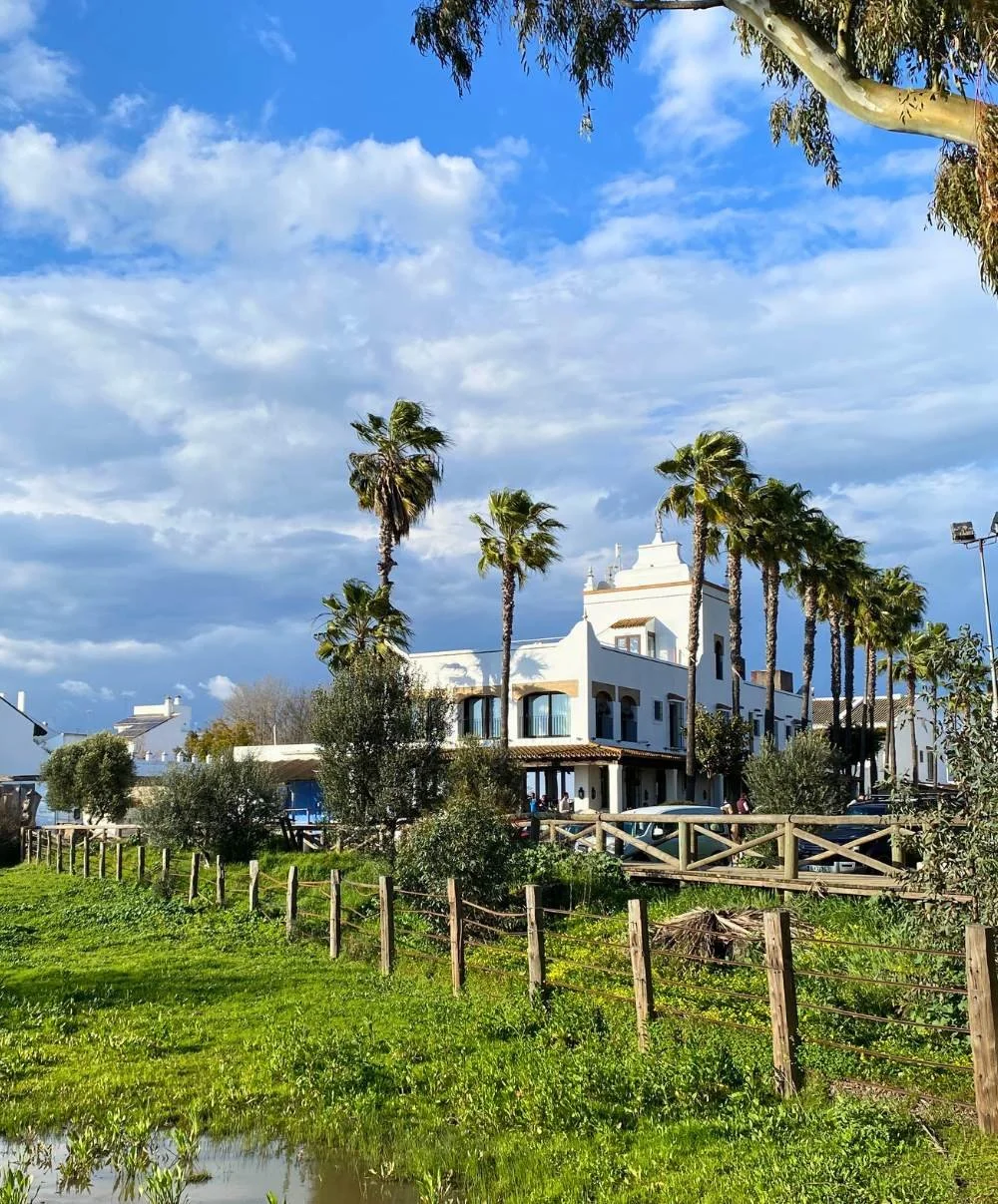
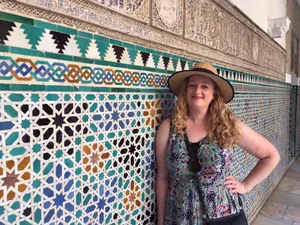
Hotel La Malvasía. Photo © Amy Macpherson
After living in Andalucía for three years - during which my main hobby was seeing as much of southern Spain as humanly possible - I’ve stayed in some unforgettable places, where the accommodation was much more than somewhere to sleep after a busy day of sightseeing.
Here are some of my favourites. From holiday homes full of authentic charm to historic hotels and even a pair of ghosts - if you’re looking for unique places to stay in Andalucía, this list has you covered.
This post contains affiliate links, which means I may earn a small commission if you book or buy through them, at no extra cost to you. Thanks for your support!
Castillo de Castellar, Cádiz
Spending the night inside a medieval castle has to be one of my favourite Andalusian experiences so far. Built between the 13th and 15th centuries and perched on a rocky outcrop overlooking the Campo de Gibraltar, the Castle of Castellar de la Frontera is one of the few fortified villages in Spain that is still inhabited.
In the 1970s, most of its residents were relocated to the nearby town of Castellar Nuevo, but a handful of locals stayed behind and were gradually joined by a small international community of artists and hippies - a mix that still shapes the village today.
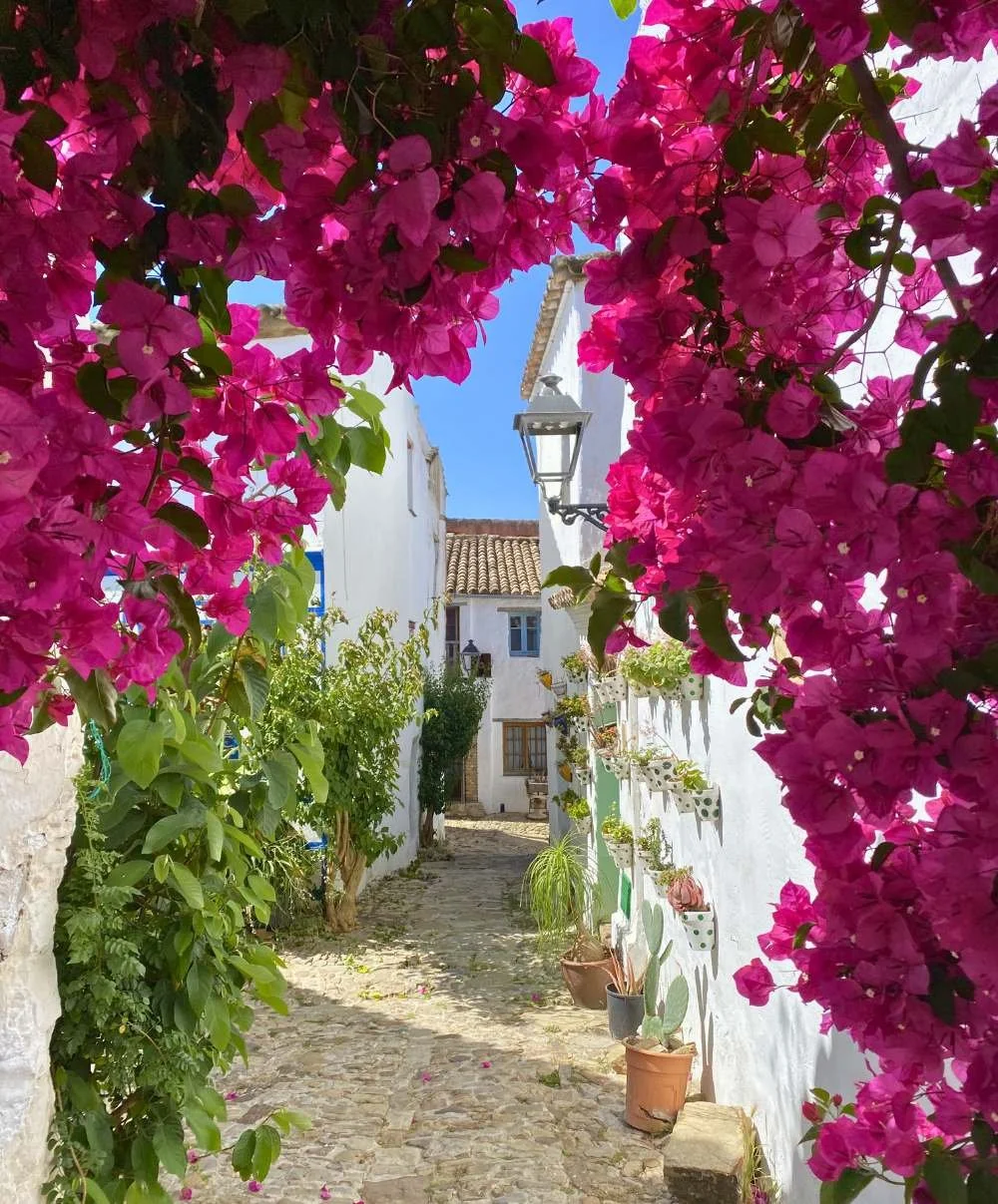
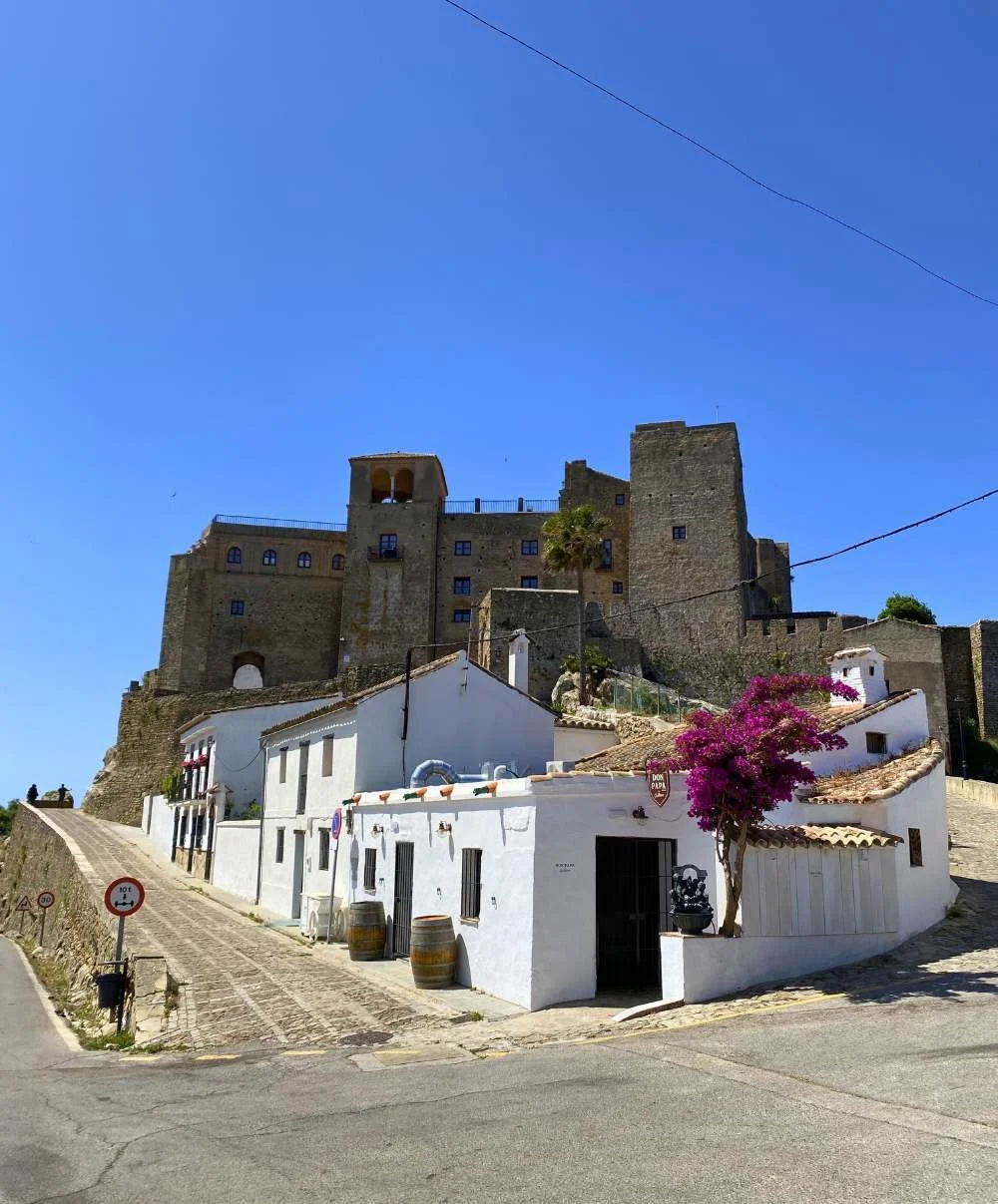
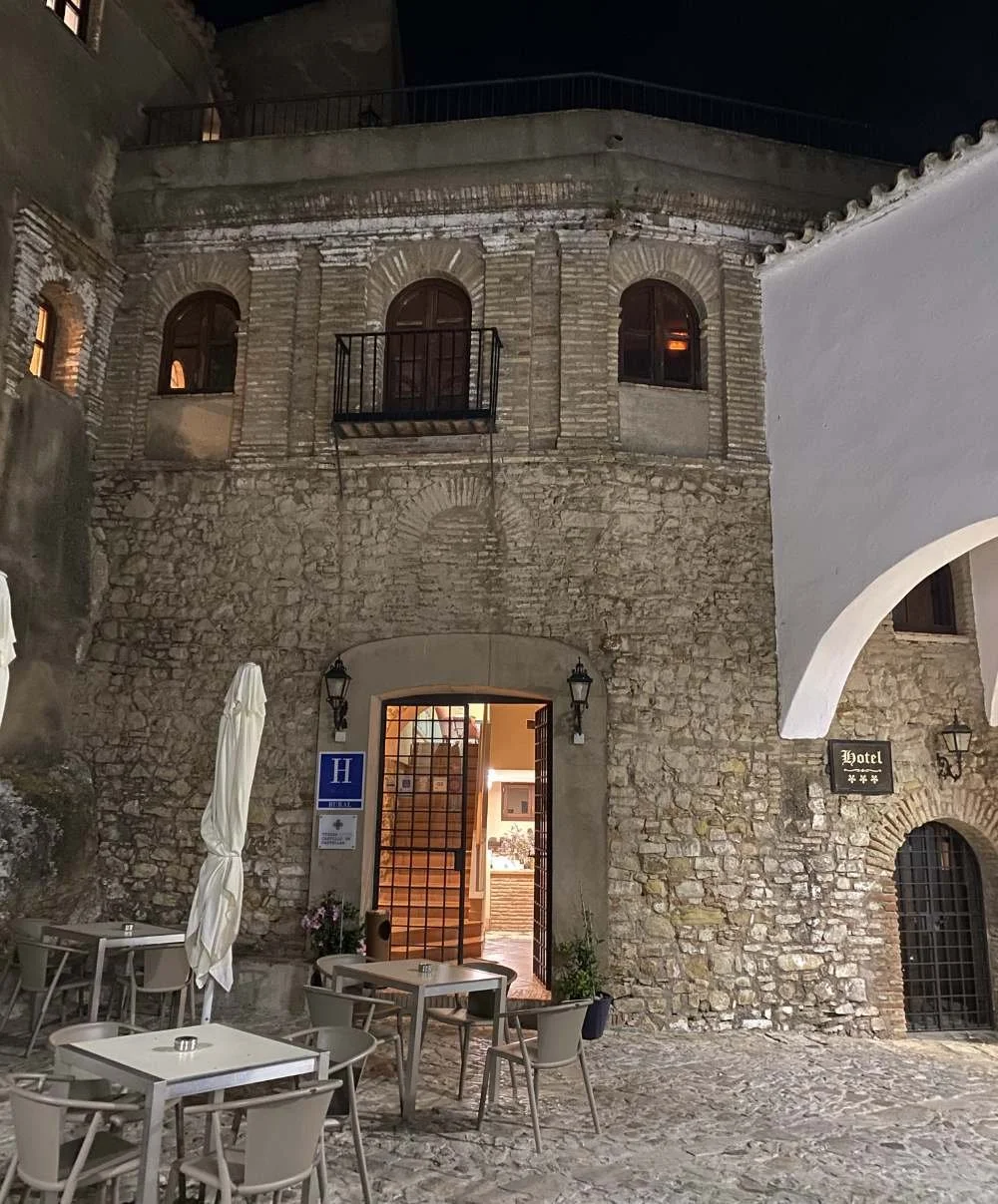
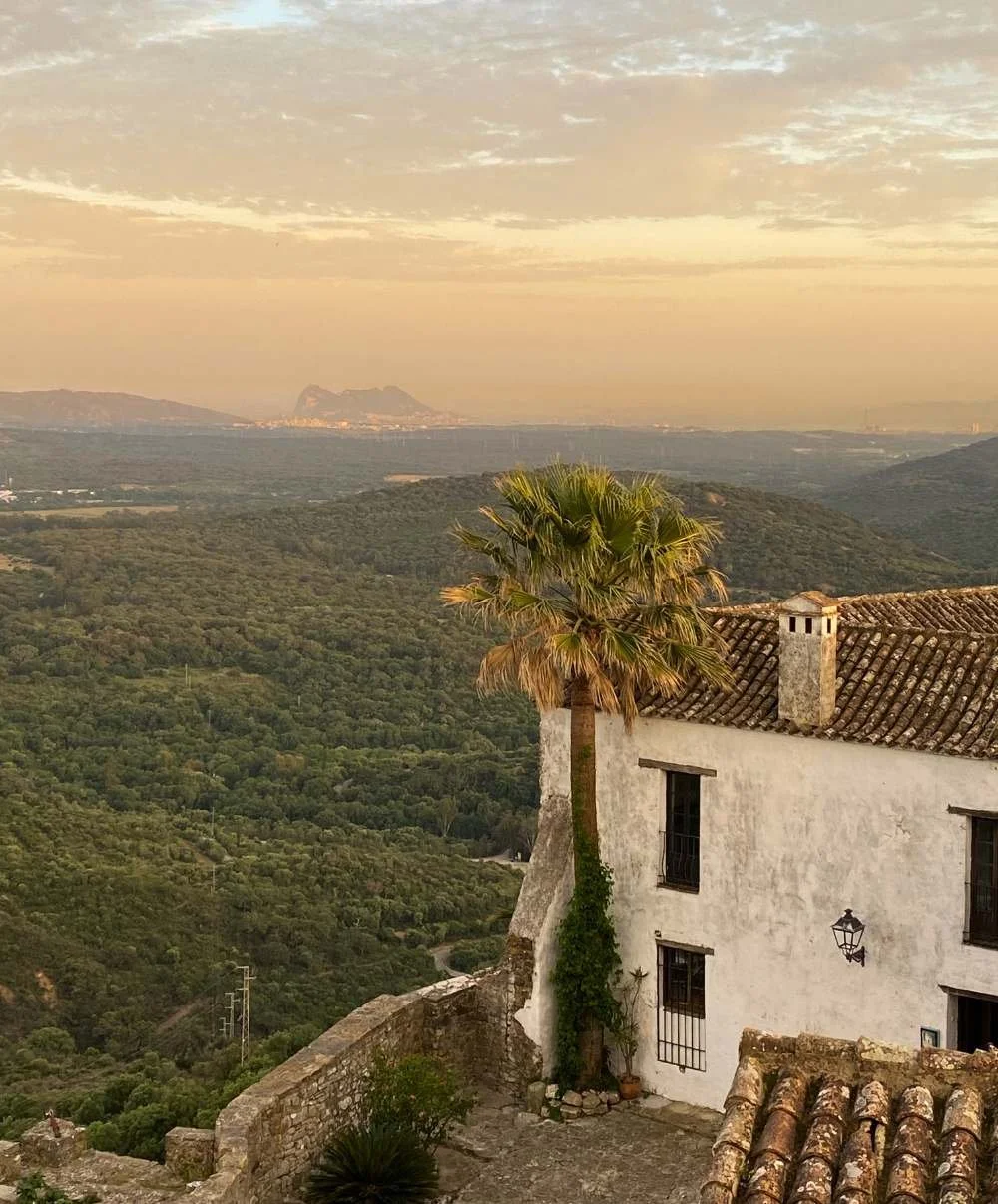
Inside the castle walls, you’ll find a few little shops and craft workshops, cobbled lanes full of hanging plants and even a flamenco bar (Peña Flamenca El Duende). There’s also a 3* hotel, part of the local TUGASA group. It’s built into the former defensive towers of the castle’s alcázar (fortress) and has just nine rooms, which makes booking one feel like a minor triumph.
The castle is surrounded by the forests of Los Alcornocales Natural Park and overlooks the Guadarranque reservoir. At dusk, opening the windows of our room, all I could hear was birdsong drifting up from the valley below. I loved heading up to the hotel’s roof terrace at sunset to admire the views over the countryside and the Rock of Gibraltar in the distance.
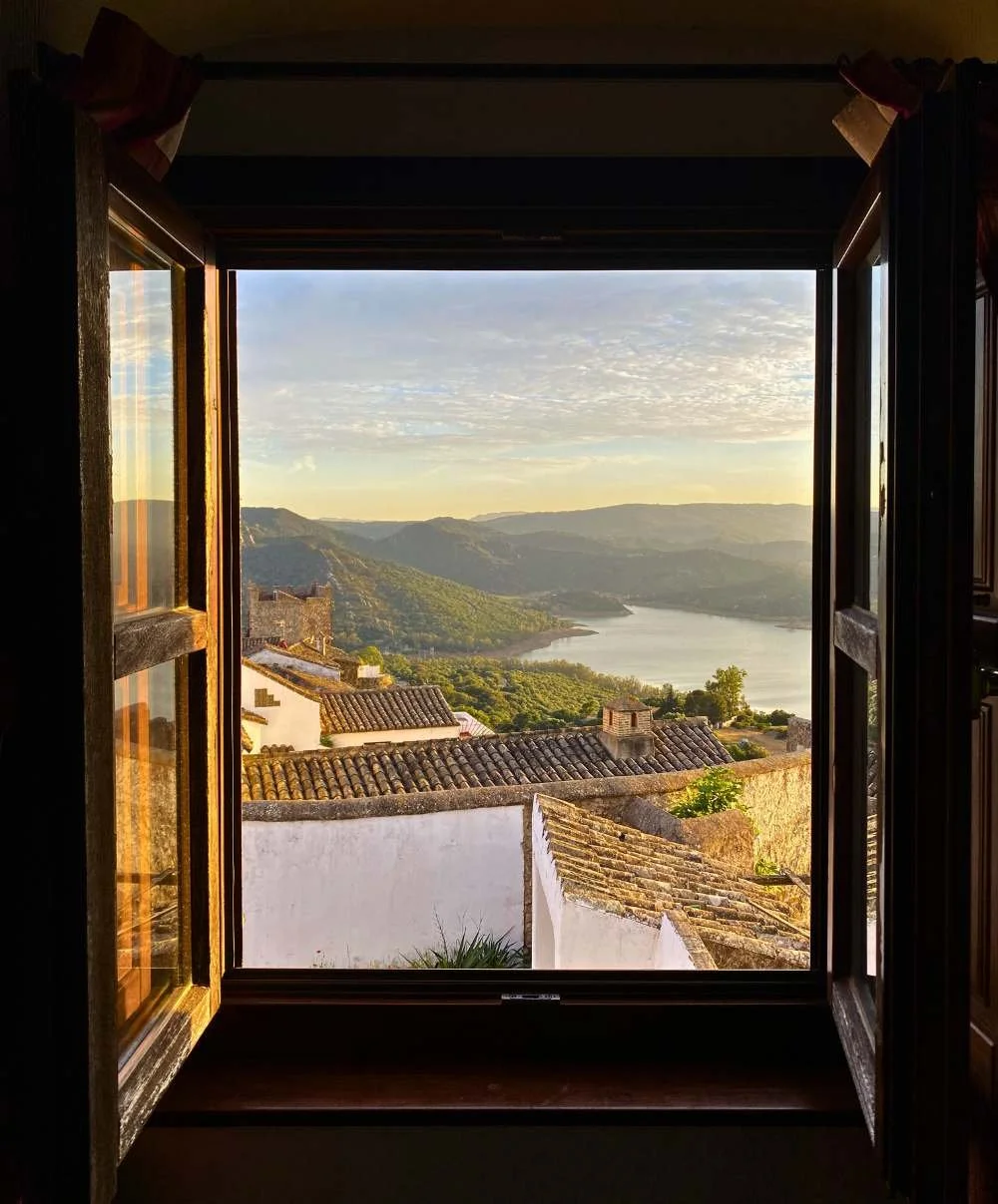
The view from our hotel room. Photo © Amy Macpherson
Tips for visiting: Thanks to its splendid isolation, you’ll need to drive here - it’s around 2 hr 15 from Seville, 1 hr 30 from Málaga or Cádiz, and under an hour from Gibraltar. There’s free parking outside the castle gates. Don’t miss the hotel’s restaurant, El Aljibe, where you can try local dishes like wild boar stew and artichokes with jamón and dates.
Check availability at Booking.com
Las Casas de la Judería, Seville
Sometimes called a “city within a city”, this is one of Seville’s most intriguing hotels. Las Casas de la Judería is a sprawling complex of 27 houses in the city’s old Jewish quarter, some hundreds of years old.
At street level, the houses are linked by a series of garden pathways and courtyards. Beneath the streets, they’re connected by a maze of tunnels that hark back to the city’s Roman past.
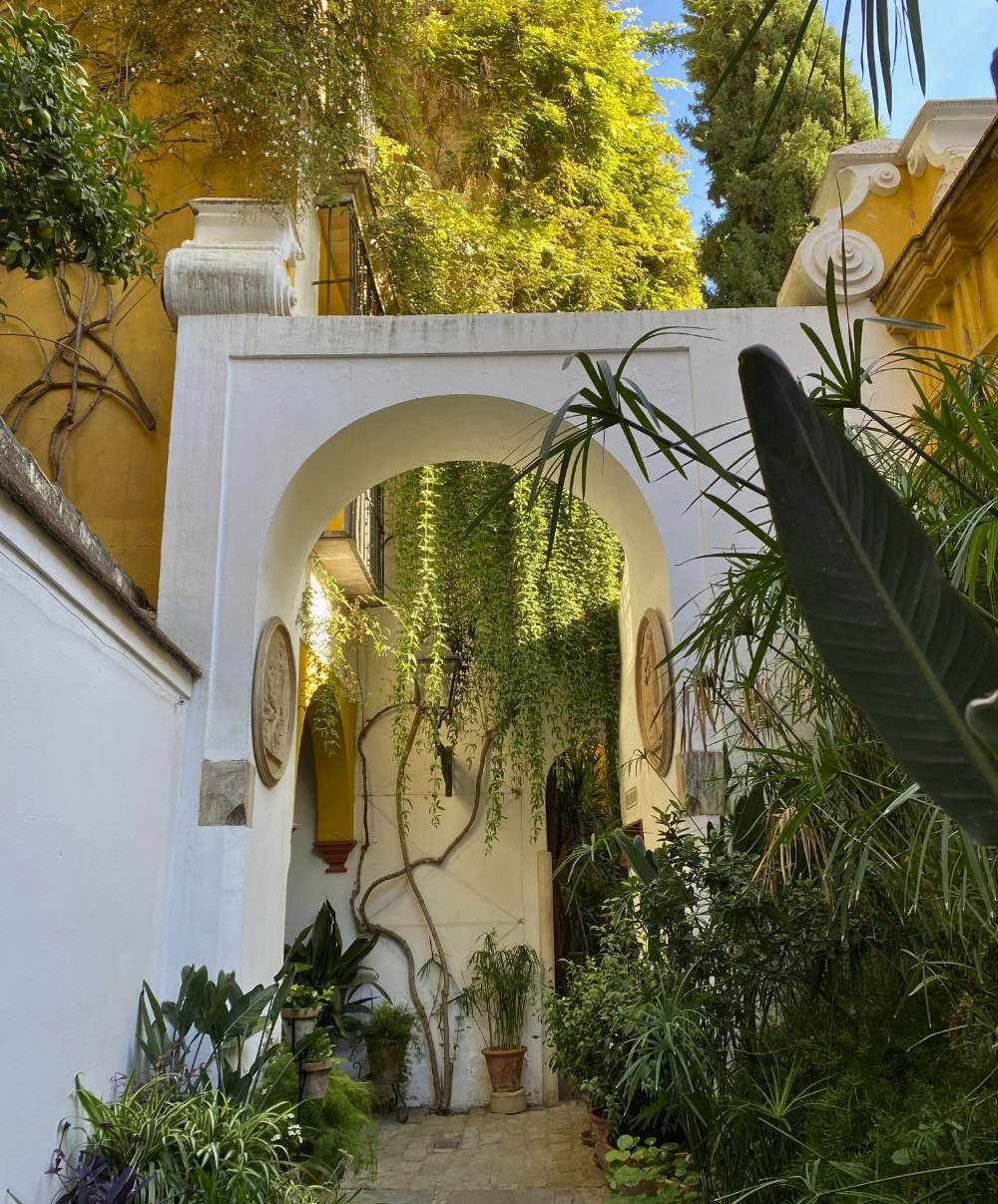
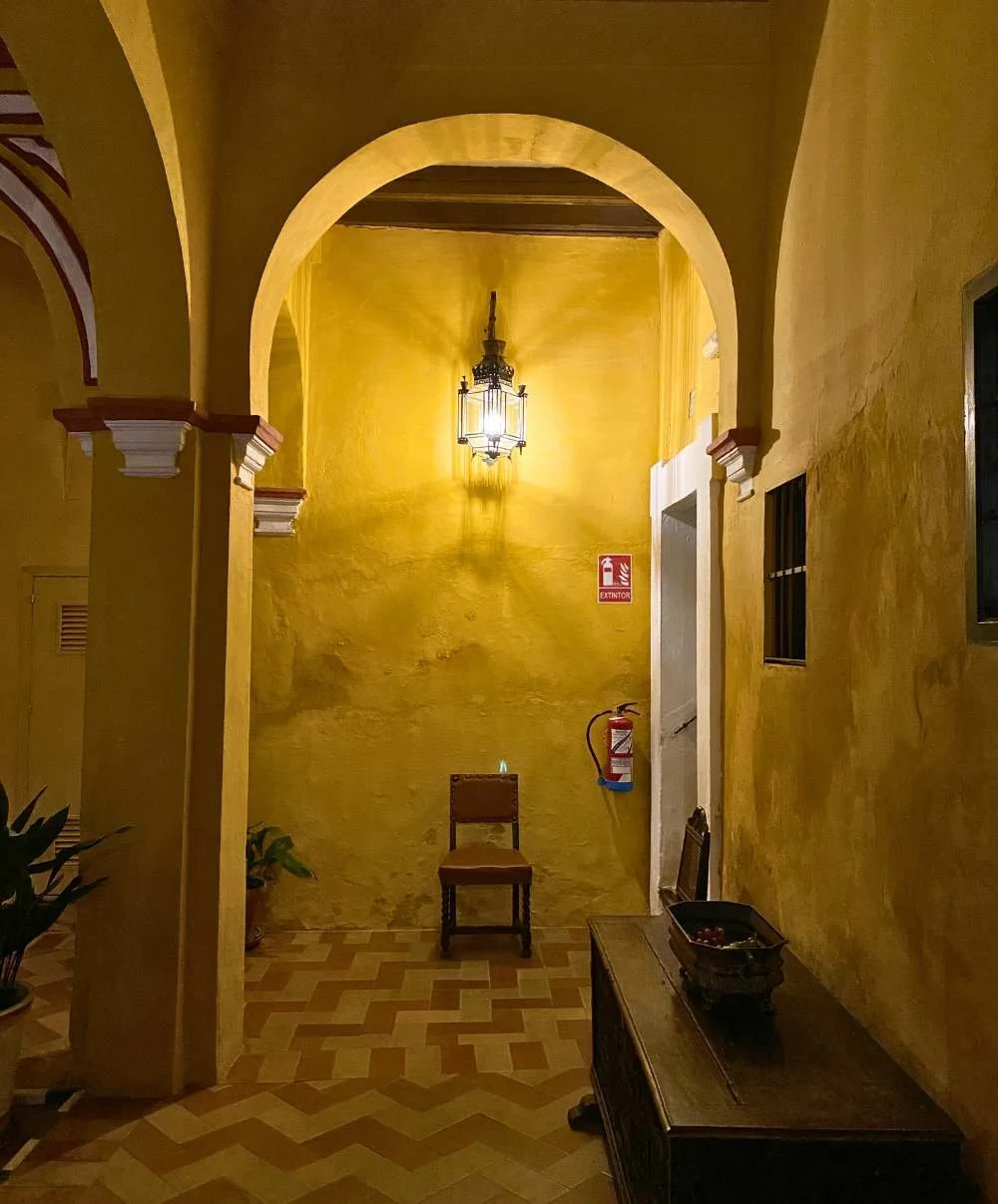
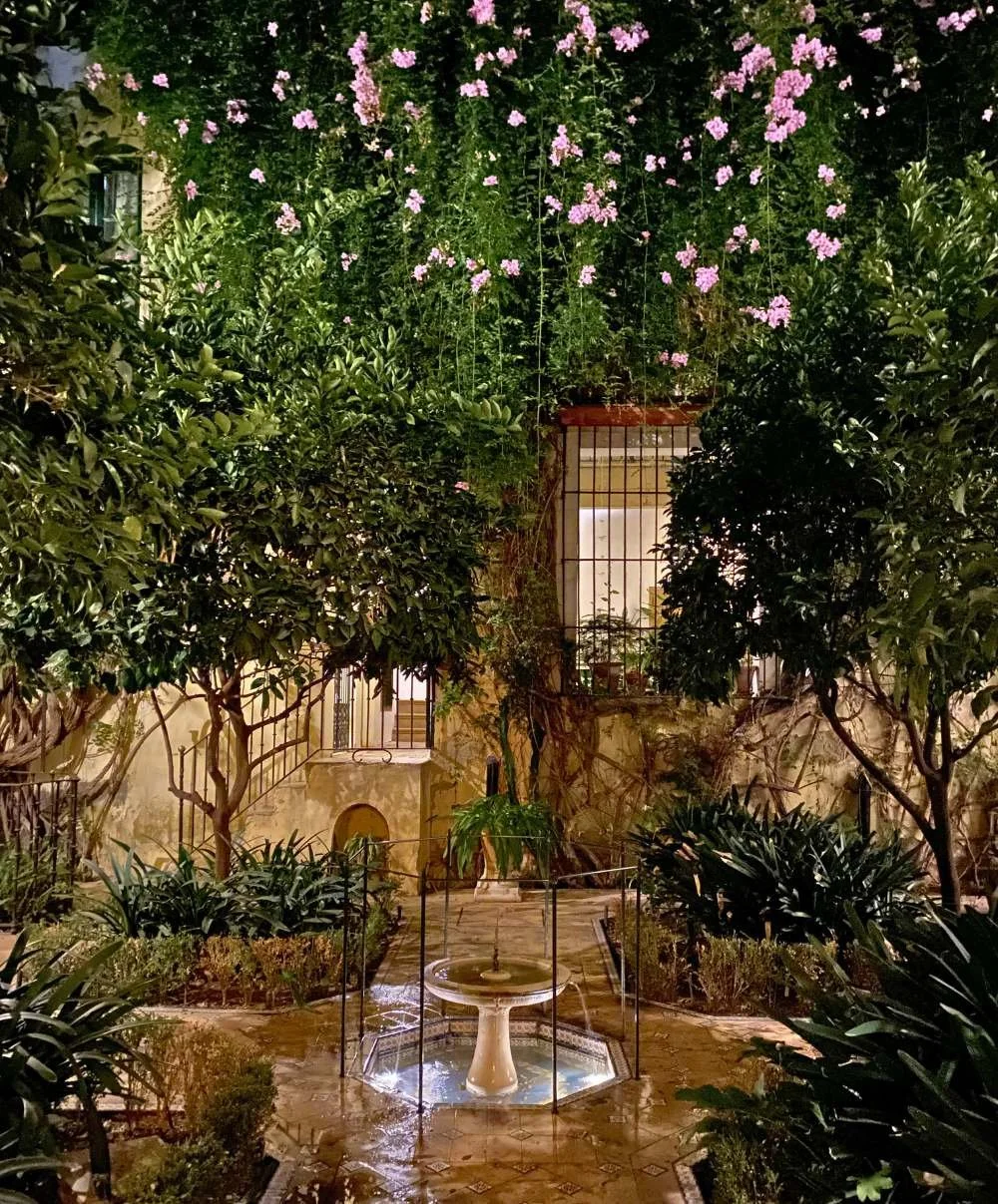
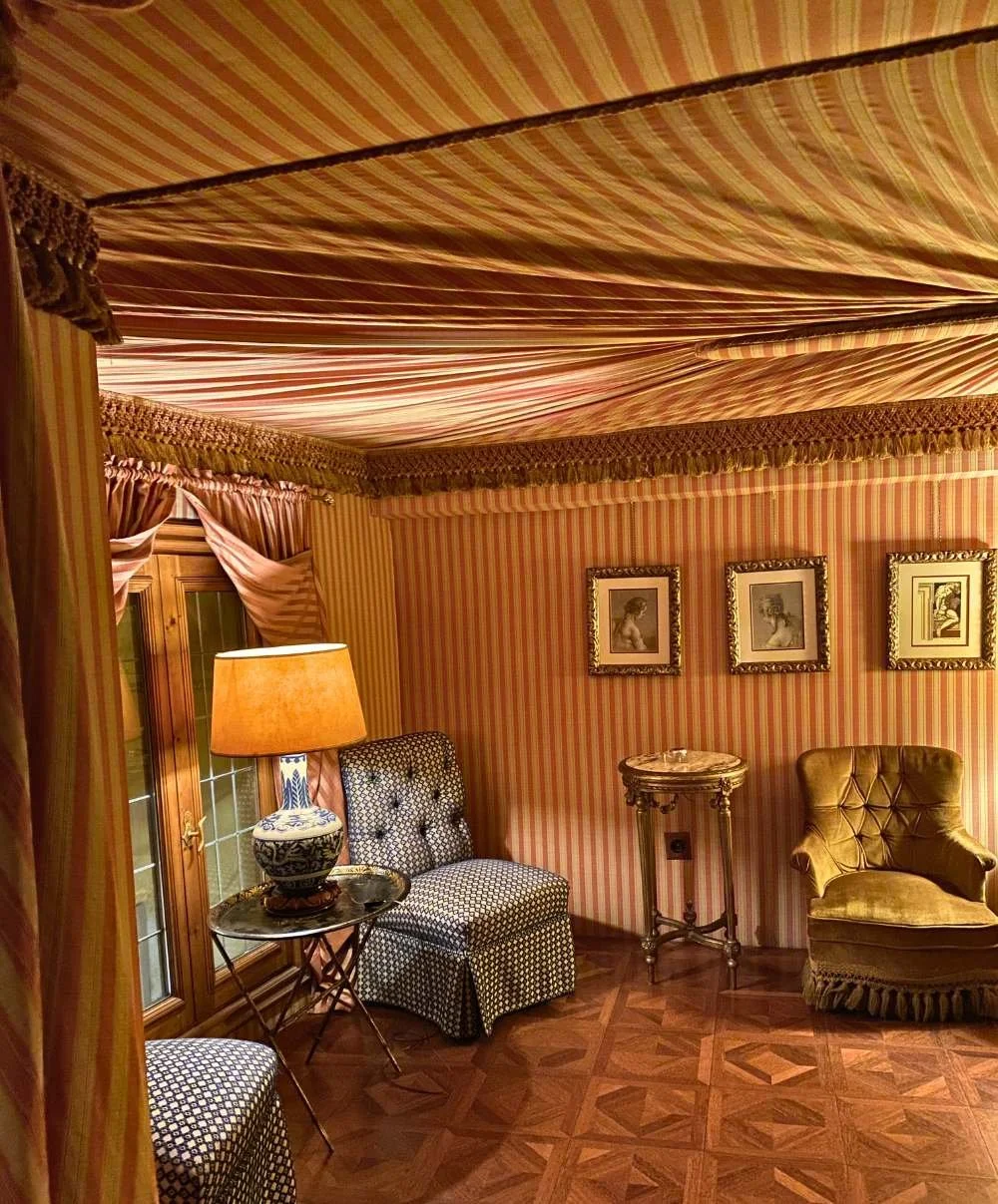
If your sense of direction is anything like mine, you will get lost. So, so lost. But that’s all part of the experience. You might stumble upon a hidden fountain, find yourself in a patio full of cascading pink flowers, or follow the sound of piano music to a tiny, low-ceilinged room full of vintage furniture that feels like it belongs in a doll’s house. Fun fact: the hotel has more than 1,800 plant pots.
Tips for visiting: As well as being perfectly located to explore the main monuments of Seville - it’s a short walk from the Cathedral, Royal Alcázar, Casa de Pilatos and other sites - the hotel has amenities including a rooftop pool and underground spa whimsically decorated with Roman sea creatures.
Check availability at Booking.com
Hotel La Chancla, Málaga
Málaga isn’t short of lovely hotels, but what makes La Chancla special is its location in the eastern beach neighbourhood of Pedregalejo. Just 20 mins by bus from central Málaga, this used to be a fishing village before it was absorbed into the wider metropolitan area, and it still retains its local charm. There are no big high-rise hotels on the waterfront here - just rows of former fishermen’s cottages interspersed with beach bars and restaurants roasting fish in boats-turned-barbecues.
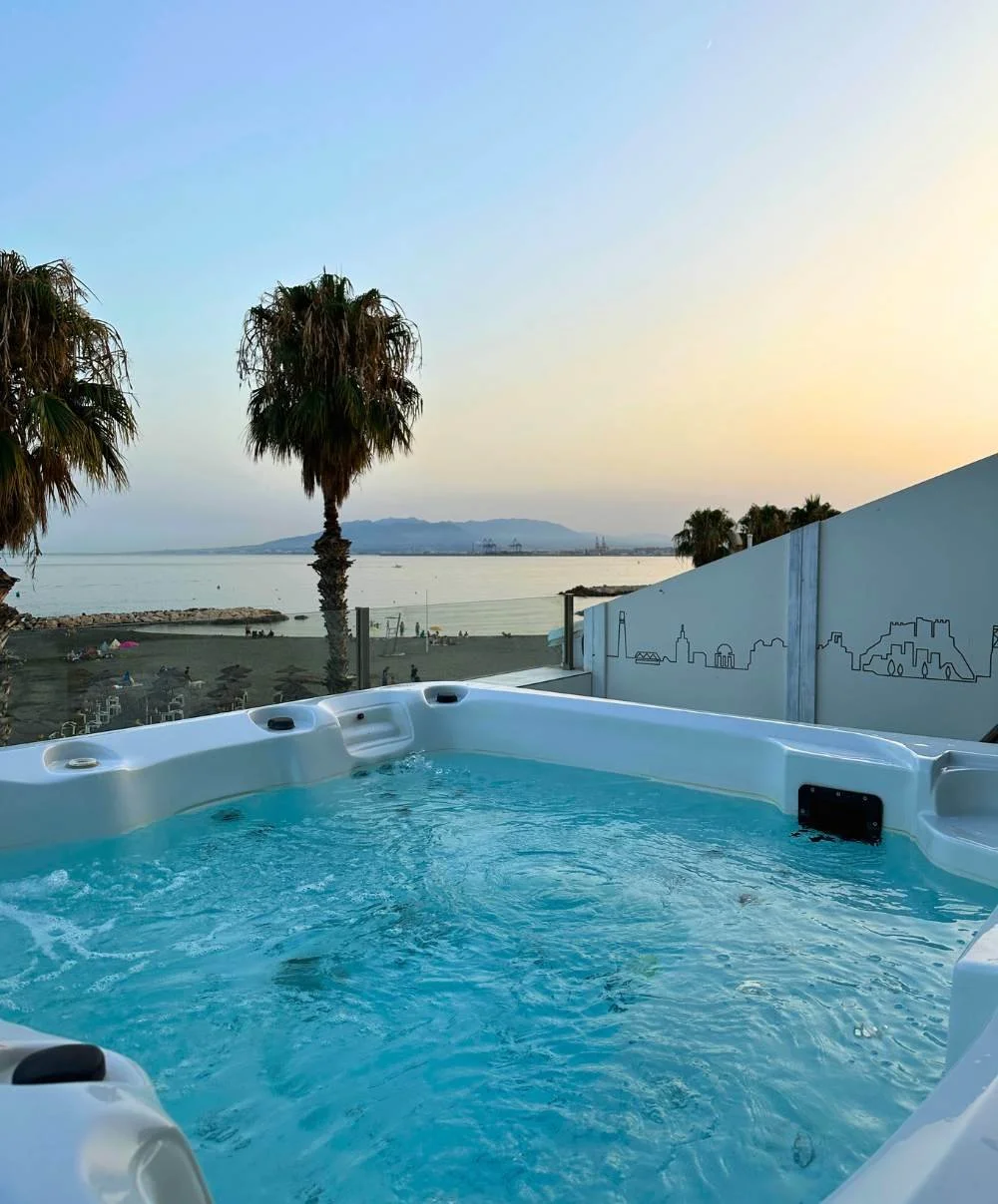
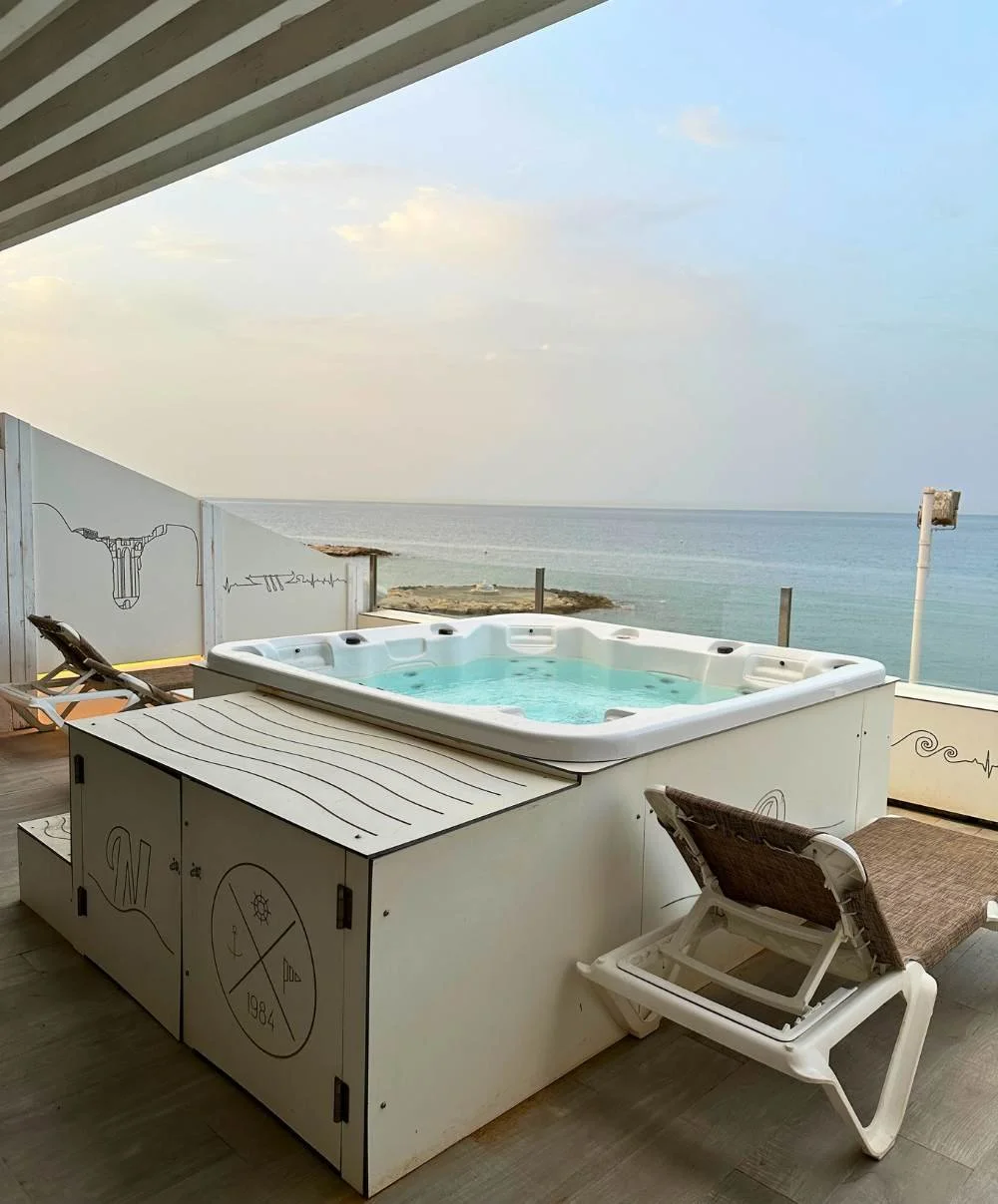
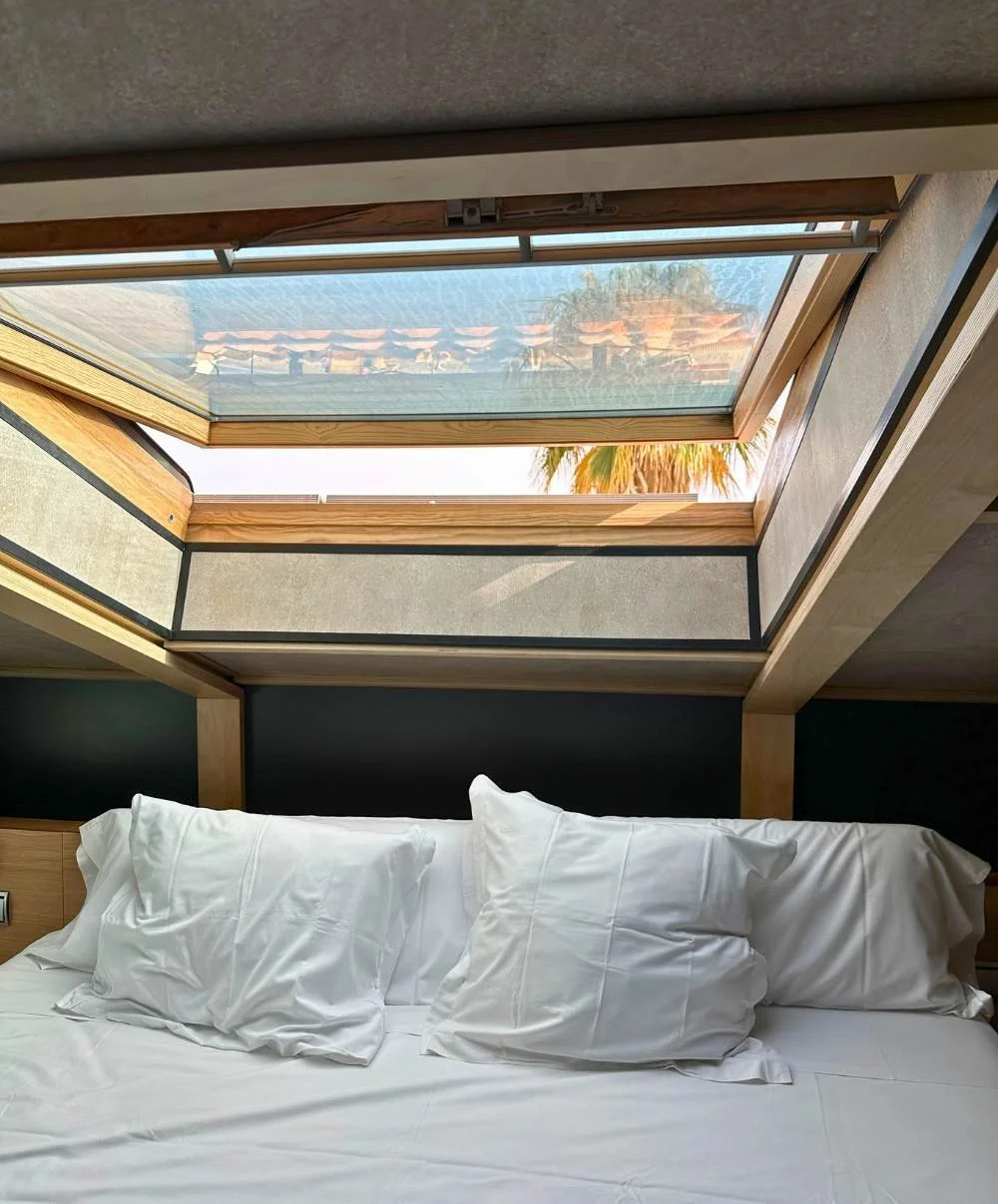
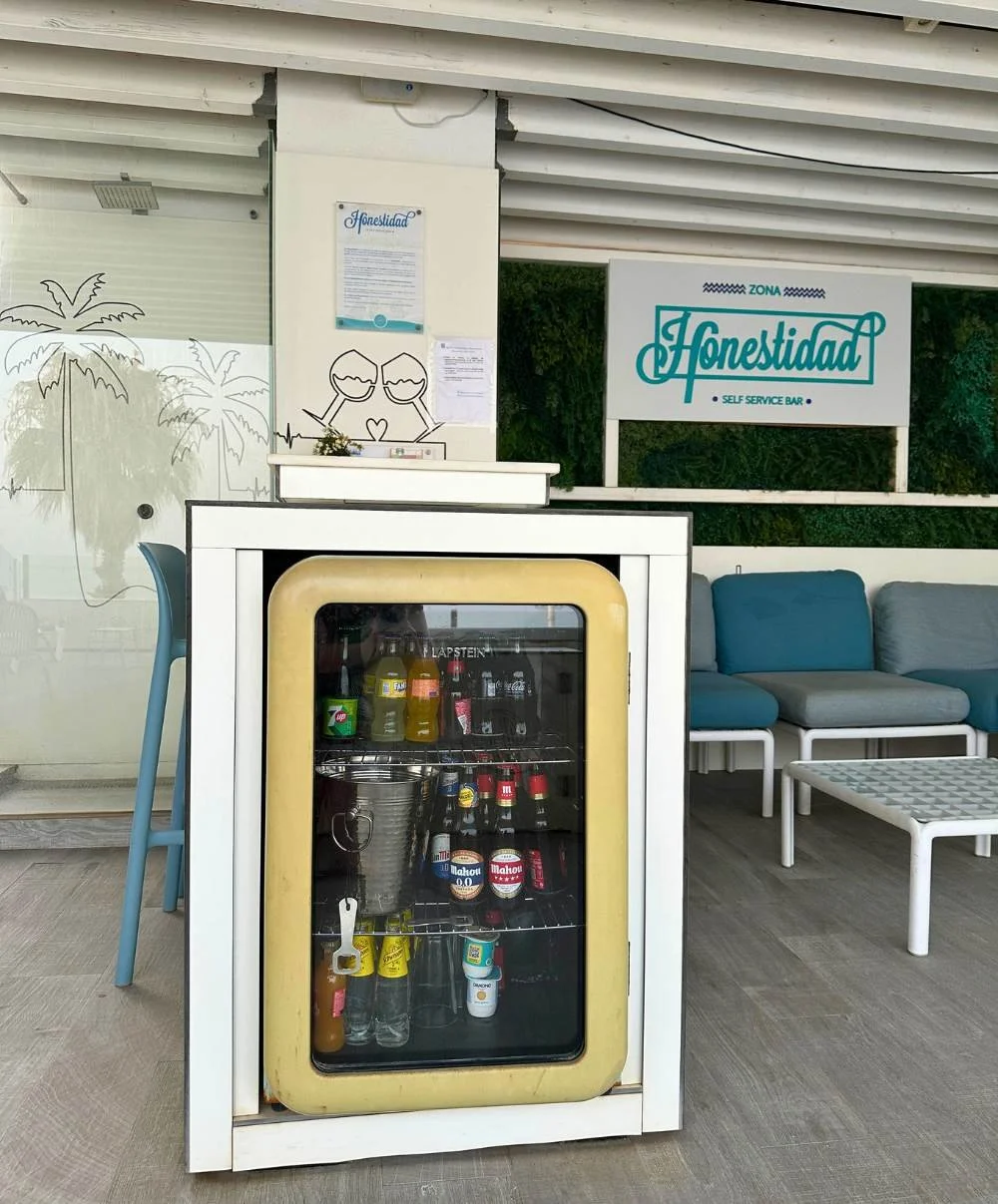
Overlooking one of the small manmade swimming coves (from afar, they look like small bites nibbled out of the coastline), La Chancla is a locally-owned boutique hotel with just nine rooms. Its star feature is its roof terrace, which has an honesty bar, sun loungers and a jacuzzi. I loved having a soak here while gazing out over the Mediterranean, and at night I was lulled to sleep by the sound of the waves. Read my full review of Hotel La Chancla.
Check availability at Booking.com
Hotel Villa Jerez
Jerez de la Frontera is a city synonymous with sherry wines, and you’re enveloped in sherry-scented hospitality the moment you step inside the boutique 5* Hotel Villa Jerez. The walls are the colour of pale golden fino, and as we checked in, a waiter poured us welcome glasses of fragrant amontillado. It was the perfect start to a special birthday weekend.
Villa Jerez belongs to the HACE group (Hoteles Andaluces con Encanto, or Charming Andalusian Hotels), which manages five elegant properties across Jerez and the nearby Costa de la Luz. A former stately home in a quiet residential area, it’s set among perfectly manicured gardens shaded by palm trees and oozes understated luxury. After a long day spent exploring Jerez’s sherry bodegas and tapas bars, returning here felt blissfully calm.
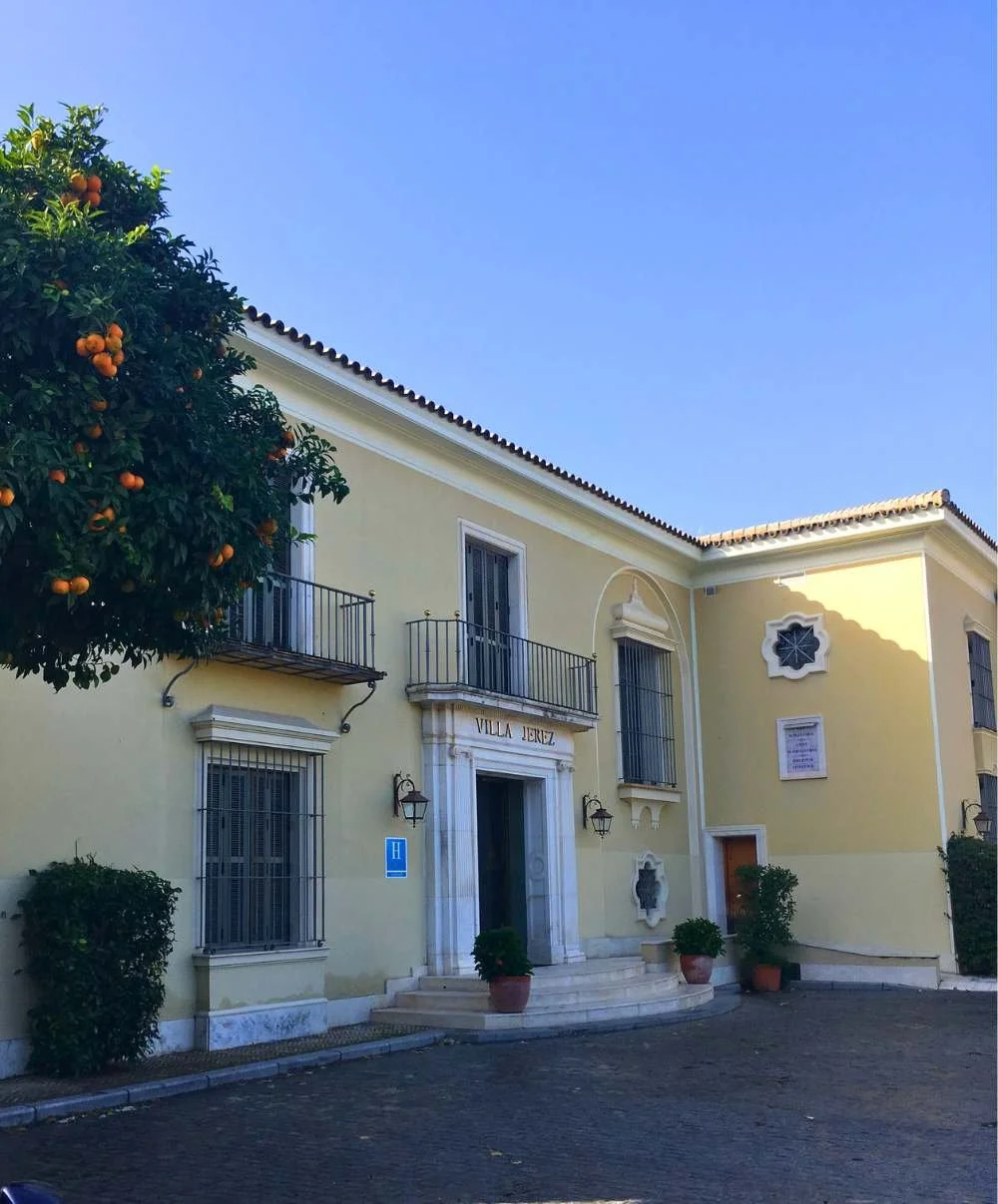
Villa Jerez. Photo: Amy Macpherson
Villa Jerez is a 10-minute walk from the fairgrounds where the famous Feria de Jerez - also known as the Feria del Caballo, or Horse Fair - takes place each spring, and roughly 20–30 minutes on foot from most of the city’s main attractions.
Check availability at Booking.com
Check availability at Expedia
Casa Paliani, Córdoba
This holiday home in the beautiful city of Córdoba is centuries old, but was remodelled by the studio of architect Rafael de la Hoz in 1944. It combines the special features of a traditional Andalusian casa-patio, such as the light-filled central courtyard (glazed, so it can be enjoyed year-round) with a mid-century modern aesthetic. A case in point: its gorgeous vintage ceramic tiles, which were individually hand-painted by the Seville artisan tile makers Mensaque Rodriguez.
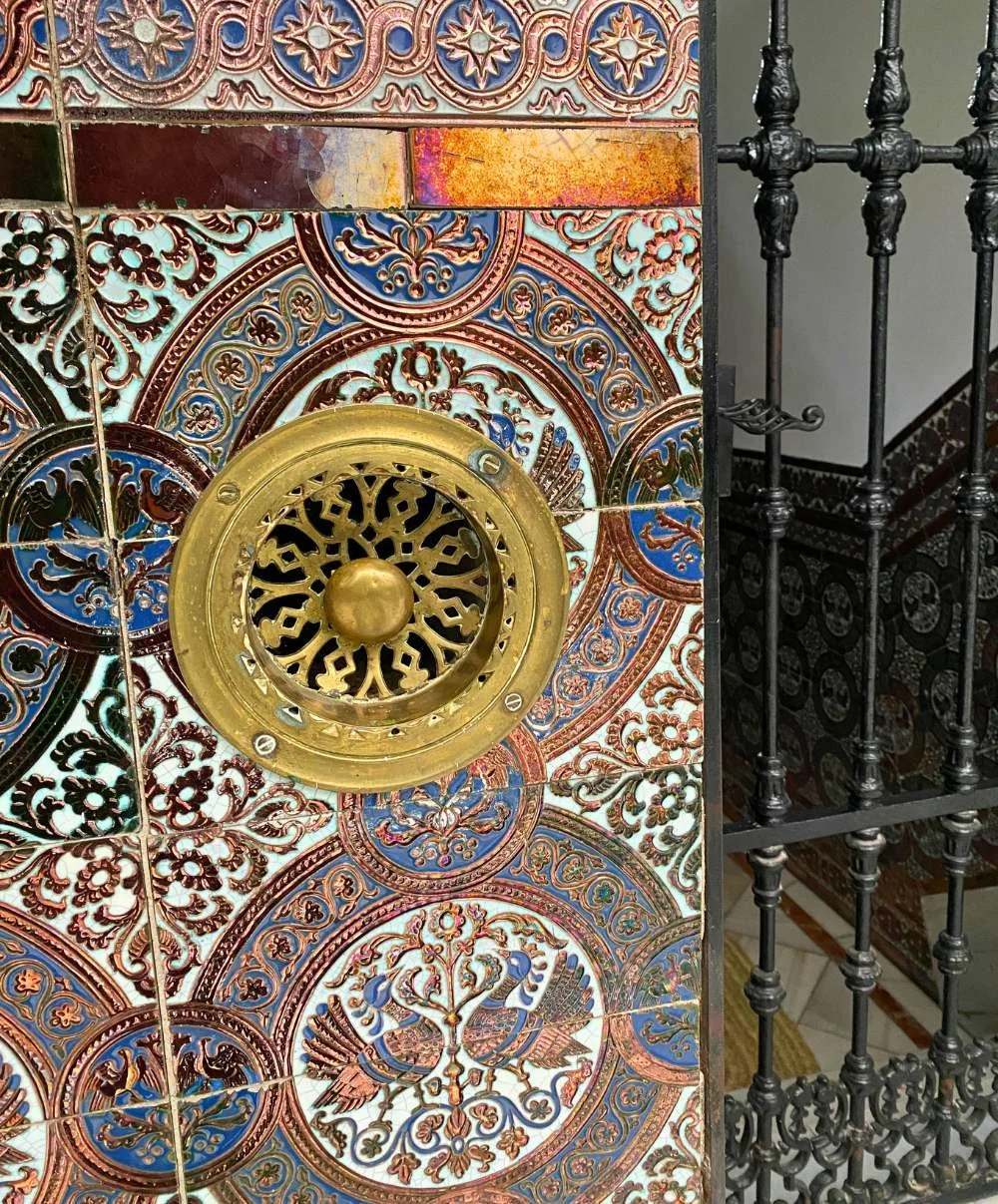
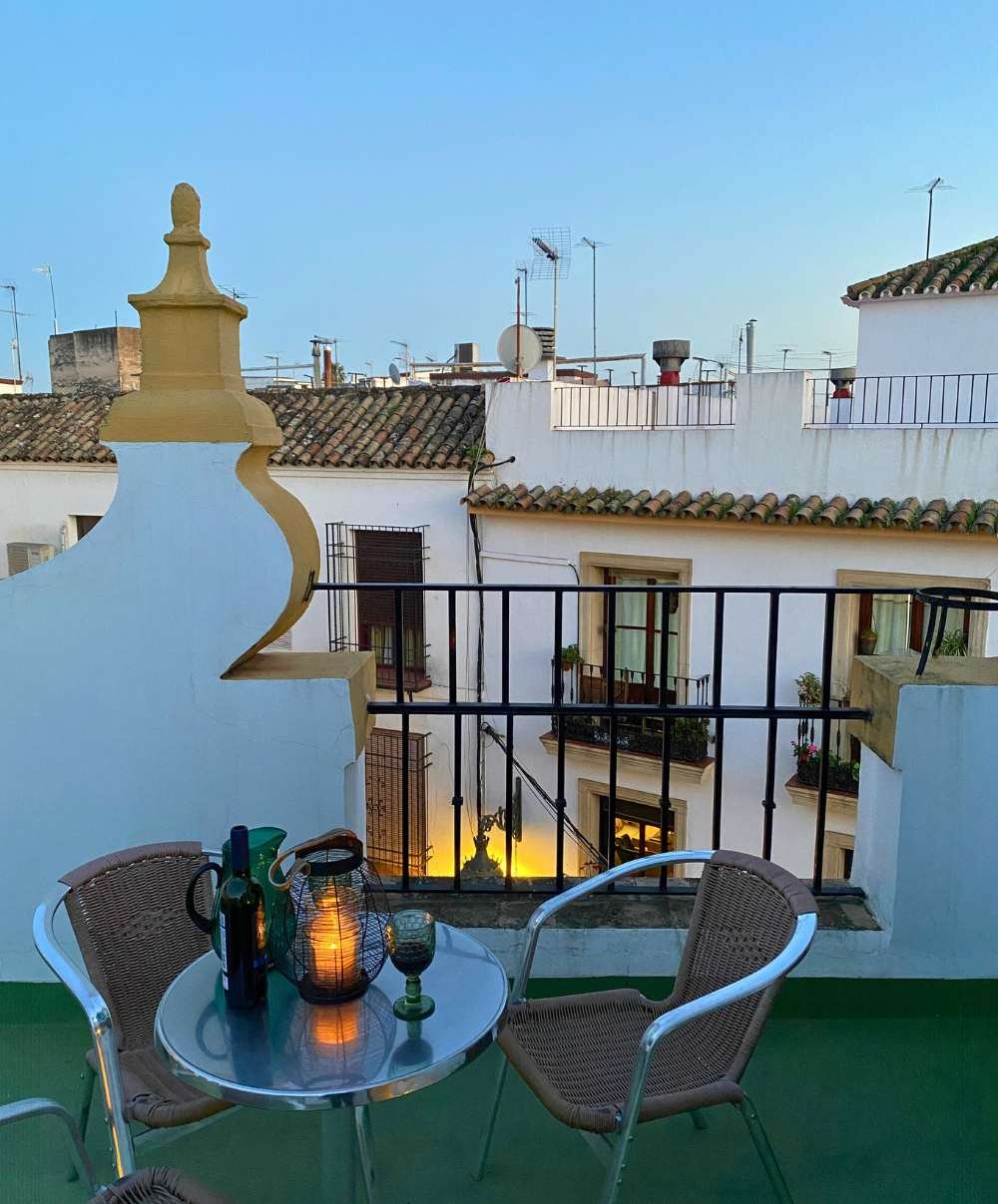
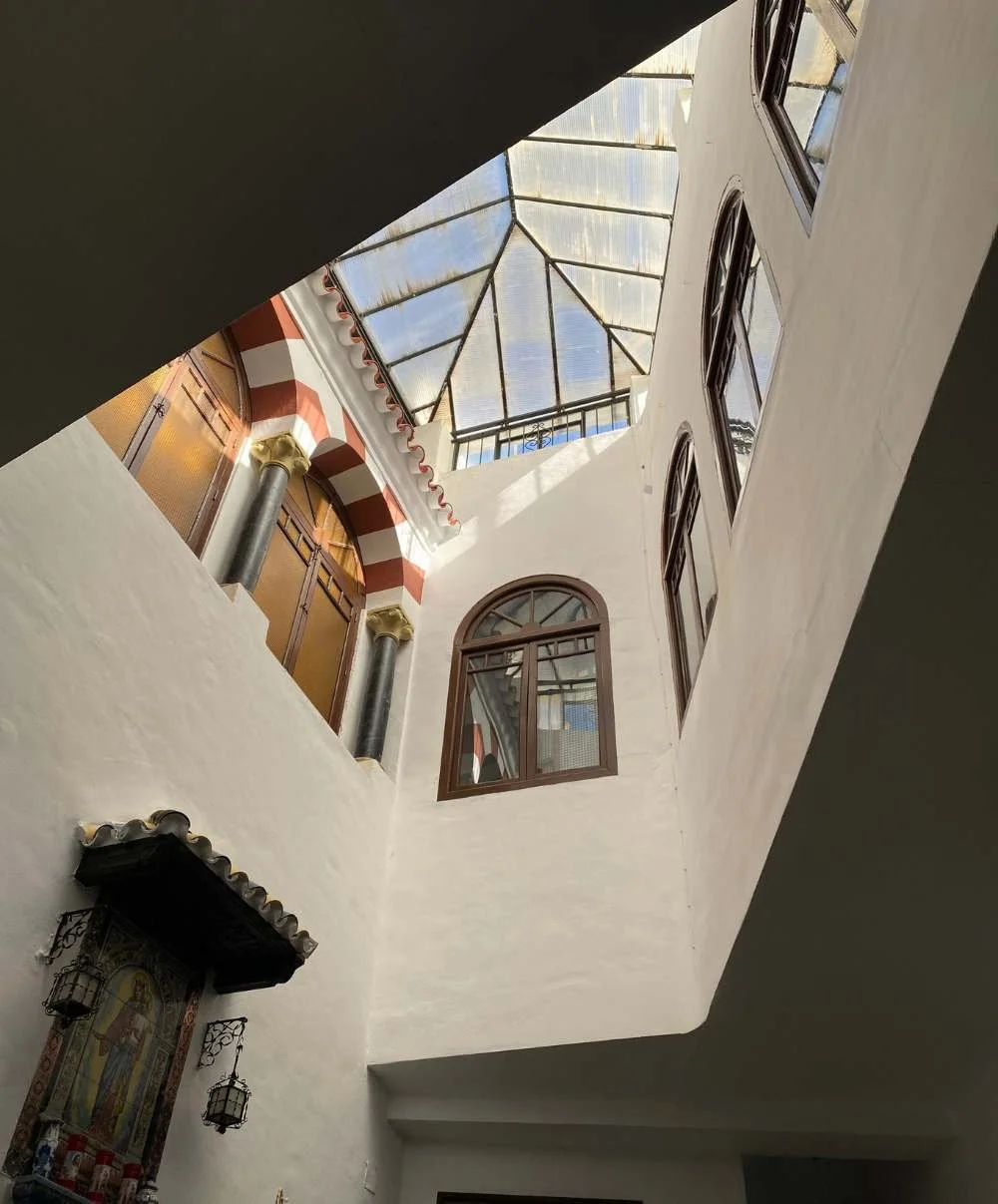
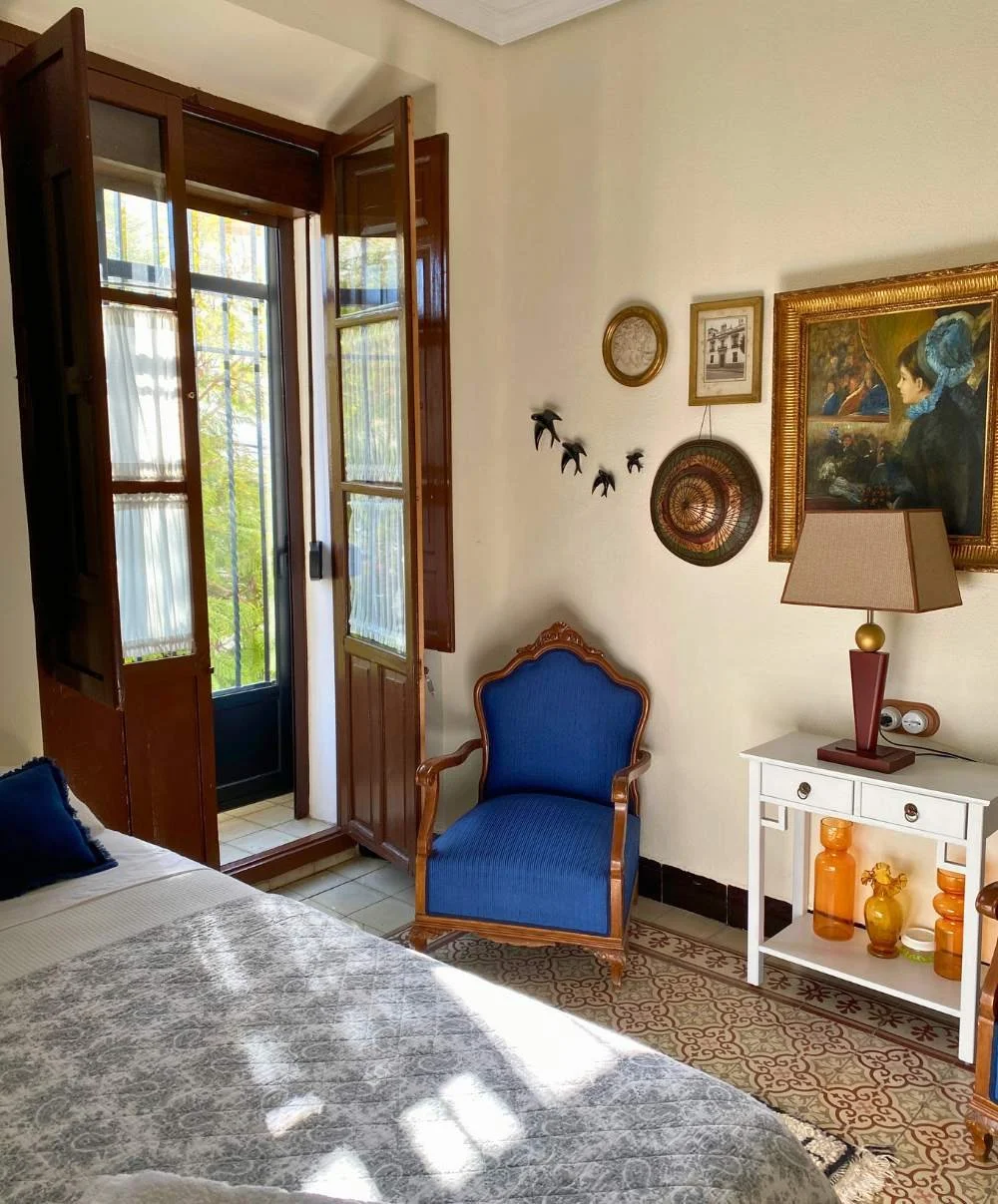
I stayed here as a guest of its owner Paloma, a fashion designer, who has decorated the house with eclectic touches that reflect Córdoba’s history, her family’s travels, and her passion for art and design. The cherry on the cake is the large furnished roof terrace. Sitting up here with a wine or a cup of tea while night falls over the city is a magical experience.
The house sleeps up to eight people and has three complete bathrooms. If you’re travelling as a group of family or friends, staying here is not only extremely memorable but also makes a surprisingly affordable alternative to a hotel stay. It’s located in a residential neighbourhood just far enough away from the tourist trail to feel like a retreat, but still walking distance to the city’s many attractions - the gorgeous Palacio de Viana is just a few minutes away.
Tips for visiting: There are some great cafes and restaurants in the immediate area. I recommend a churros breakfast or tapas at Taberna Santi, pastries from Pastelería Roldan and a natural wine tasting at the wine bar Jugo Vinos - all local favourites.
Check availability at Booking.com
Hotel La Malvasía, El Rocío
The remote hamlet of El Rocío is often described as “Spain’s Wild West”, but for me, this doesn’t do it justice. Yes, it’s a place where life is lived on horseback (there are hitching posts outside all the houses, and even saddle-height tables outside some bars), but El Rocío is far more than a novelty - it’s a place where folklore, nature and religious passion intertwine.
Located in the province of Huelva at the edge of Doñana National Park, one of Europe’s most important wetlands, El Rocío is the epicentre of an annual pilgrimage that venerates La Virgen del Rocío and sees hundreds of thousands of devotees cross arrive on foot, on horseback and in wagons pulled by oxen.
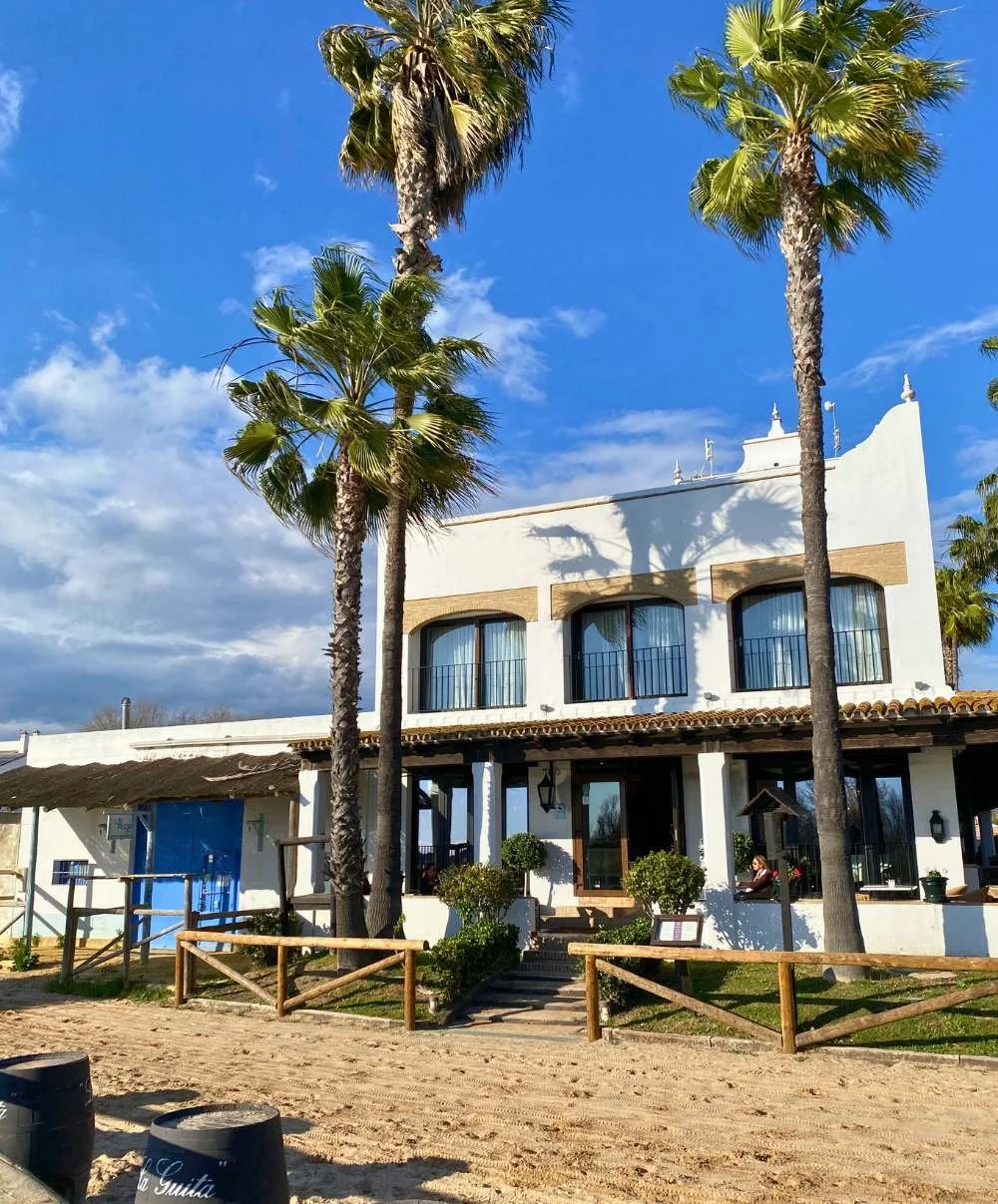
But you don’t have to be a pilgrim to visit here - and you don’t have to rough it, either. In the heart of the village is the 4* Hotel La Malvasía, a little corner of luxury surrounded by sandy streets and overlooking the marshes. In 2025 it was awarded Best Rural Luxury Hotel in Spain at the World Travel Awards.
What I loved about staying here was the combination of refined elegance with the distinctive rural aesthetic of El Rocío. This came through in little touches like the complimentary bottle of sherry in our room, the country-chic patterns of the soft furnishings, and the woven esparto grass wrapping the pillars in the restaurant - a nod to traditional Andalucían crafts.
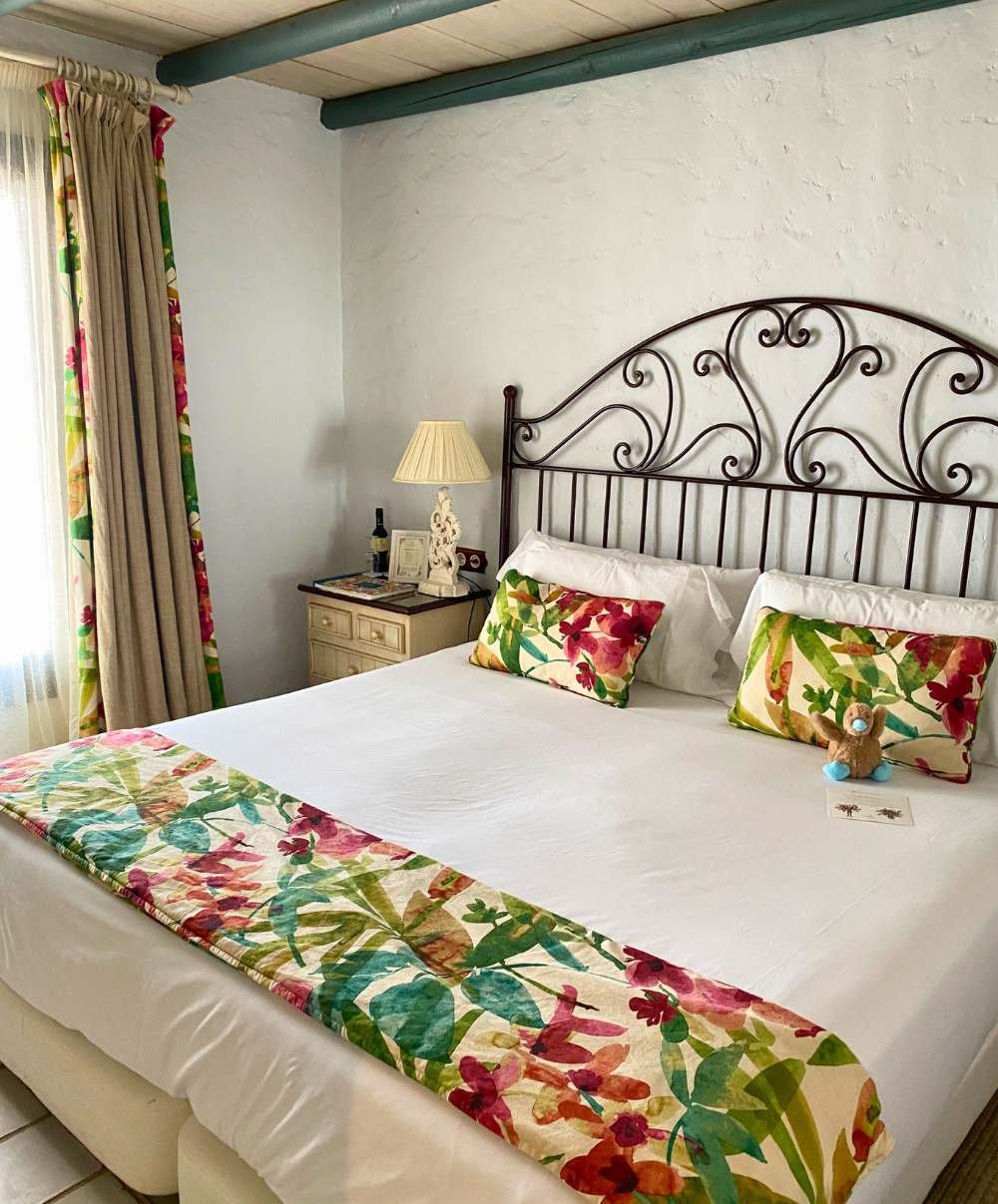
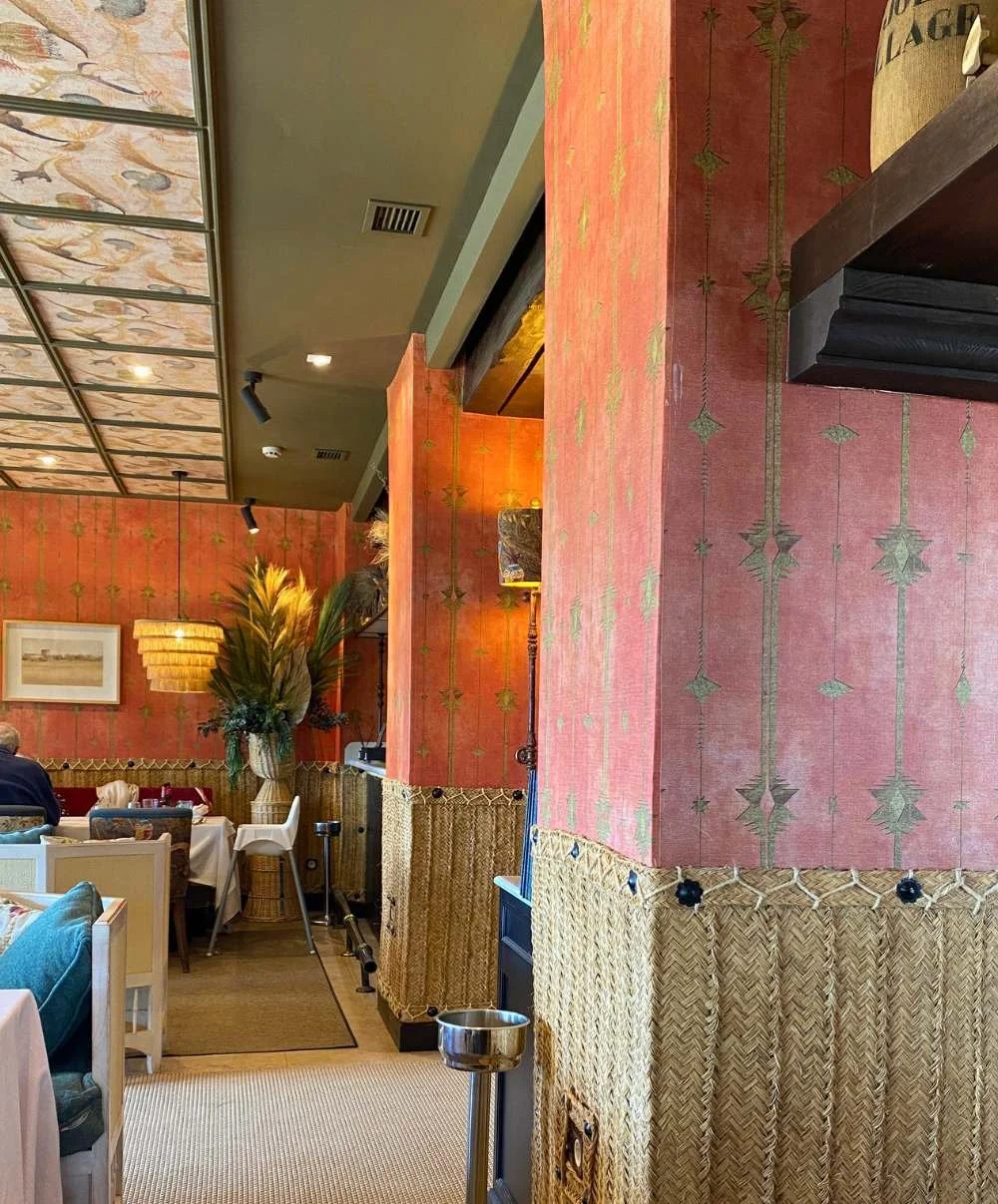
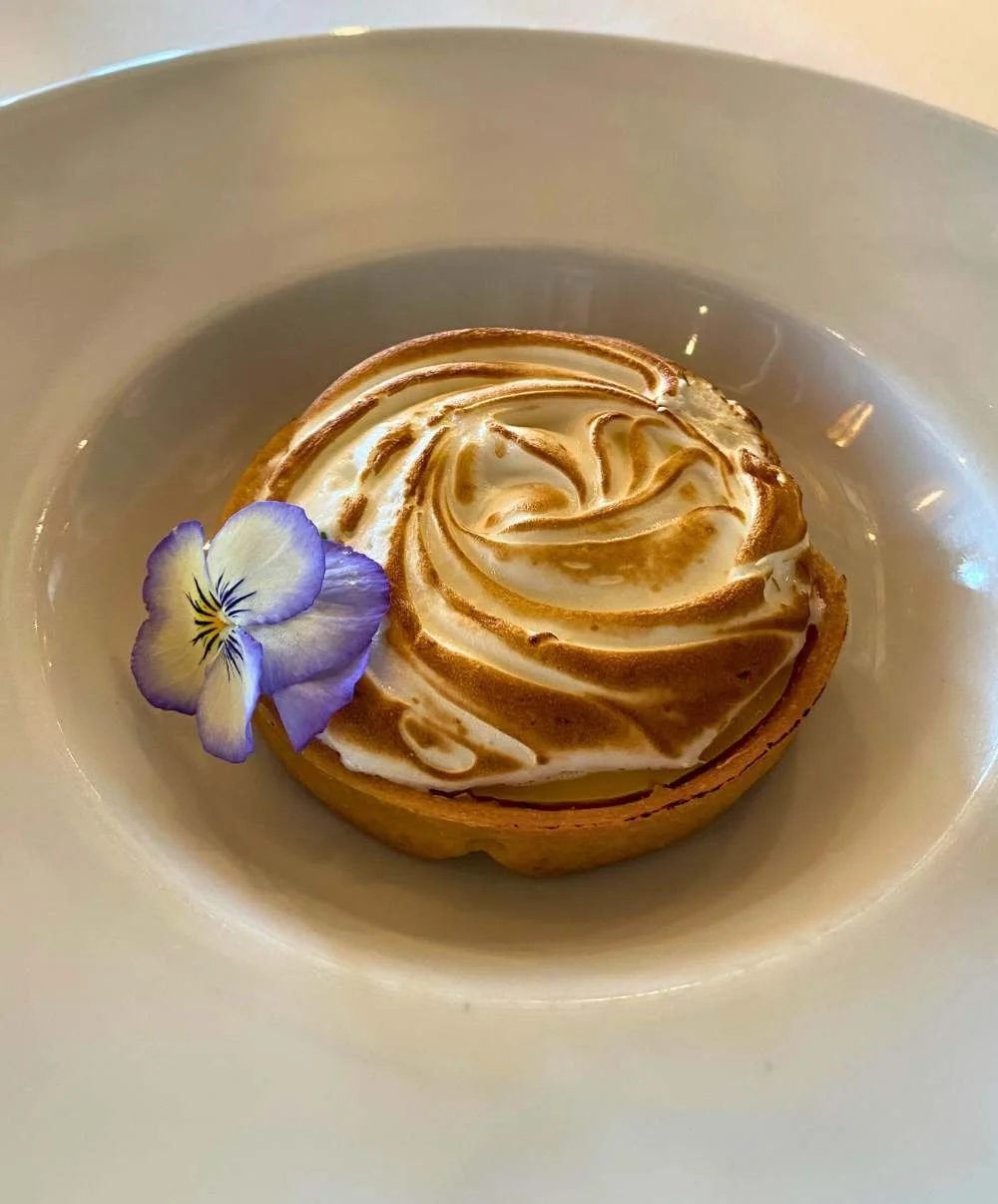
Tips for visiting: If you’re craving a quiet break surrounded by nature and away from the crowds (outside of pilgrimage season, of course!) El Rocío is a great choice. Doñana National Park is a birdwatcher’s paradise, and you can explore it via a 4WD tour or on foot - the nearby visitor centre Palacio Acebrón is a good starting point. Be sure to pay a visit to the Ermita (Hermitage) of El Rocío, a whitewashed chapel with a shell-like apse and a dramatic golden baroque altarpiece housing the figure of La Virgen del Rocío.
Check availability at Booking.com
Check availability at Expedia
Parador de Jaén
Time for another castle! Spain’s Paradors are a network of state-owned hotels, many of them former palaces, castles and stately homes. The city of Jaén has one of the most stunning examples - if you arrive at night, you’ll see it lit up from miles away, standing tall on a peak overlooking the city.
The Parador sits within the walls of the architectural complex of the Castillo of Santa Catalina, a strategic citadel that was fought over for centuries by the rulers of al-Andalus (Islamic Iberia) and the Christian kingdoms of the north. It was ultimately conquered by Ferdinand III of Castile in the 13th century.
The hotel itself is built on the site of the Alcazar Viejo (old fortress) and opened in 1965. It might be technically modern, but everything about its decor is inspired by the site’s dramatic past, such as suits of armour, huge stone fireplaces and large tapestry of Fernando III. My favourite space was the restaurant, which feels like a medieval banqueting hall complete with ornate candelabra-style lights.
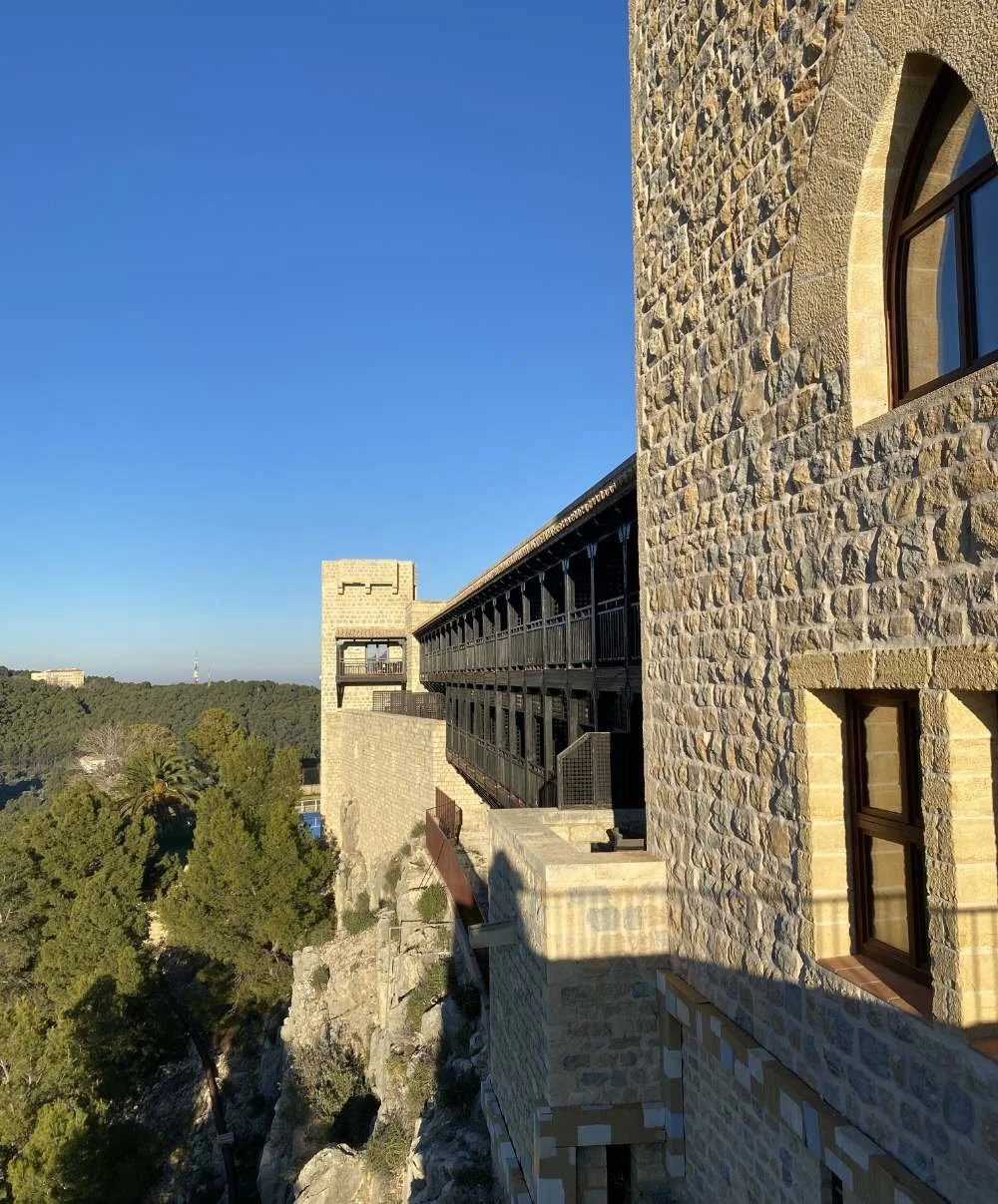
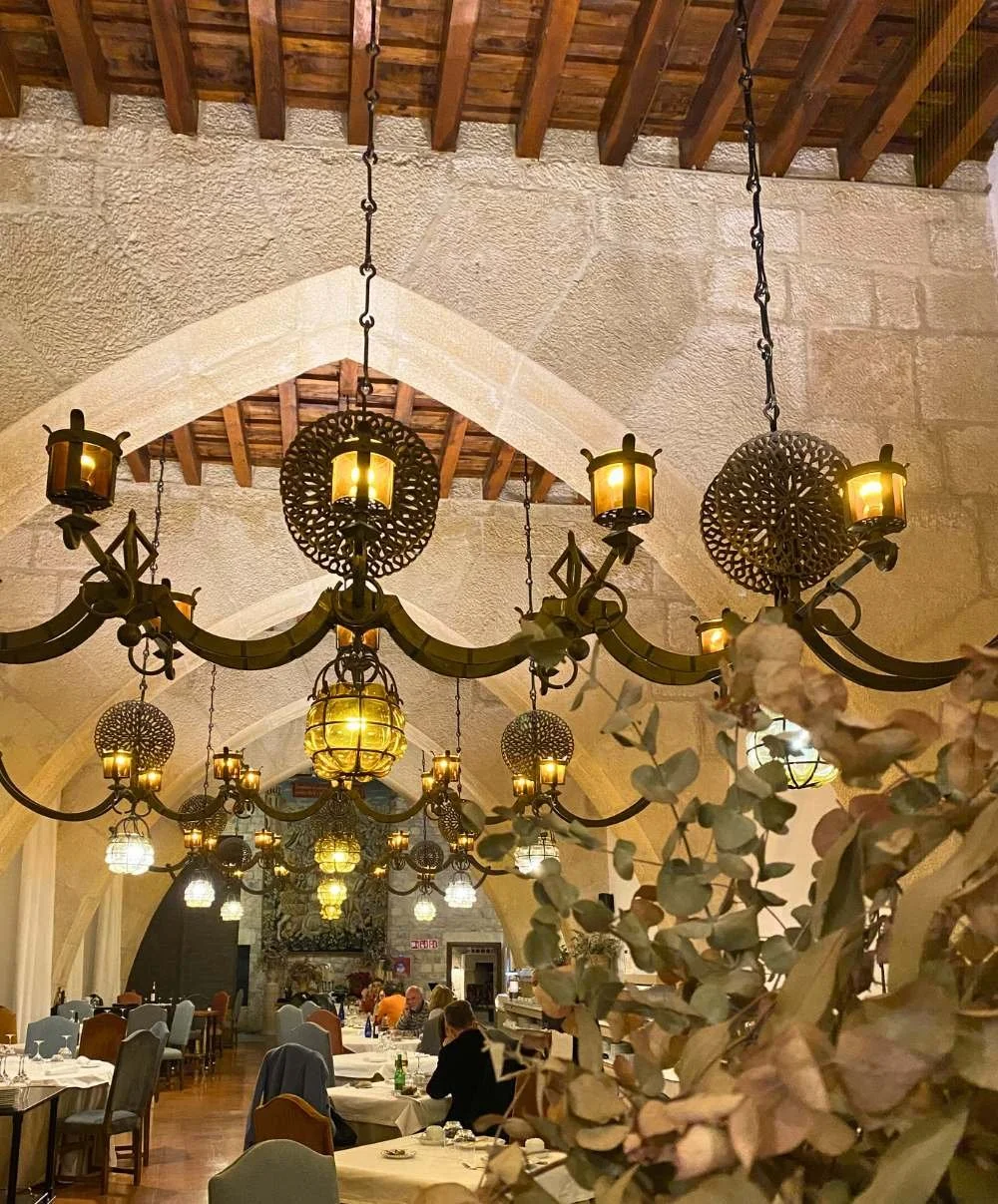
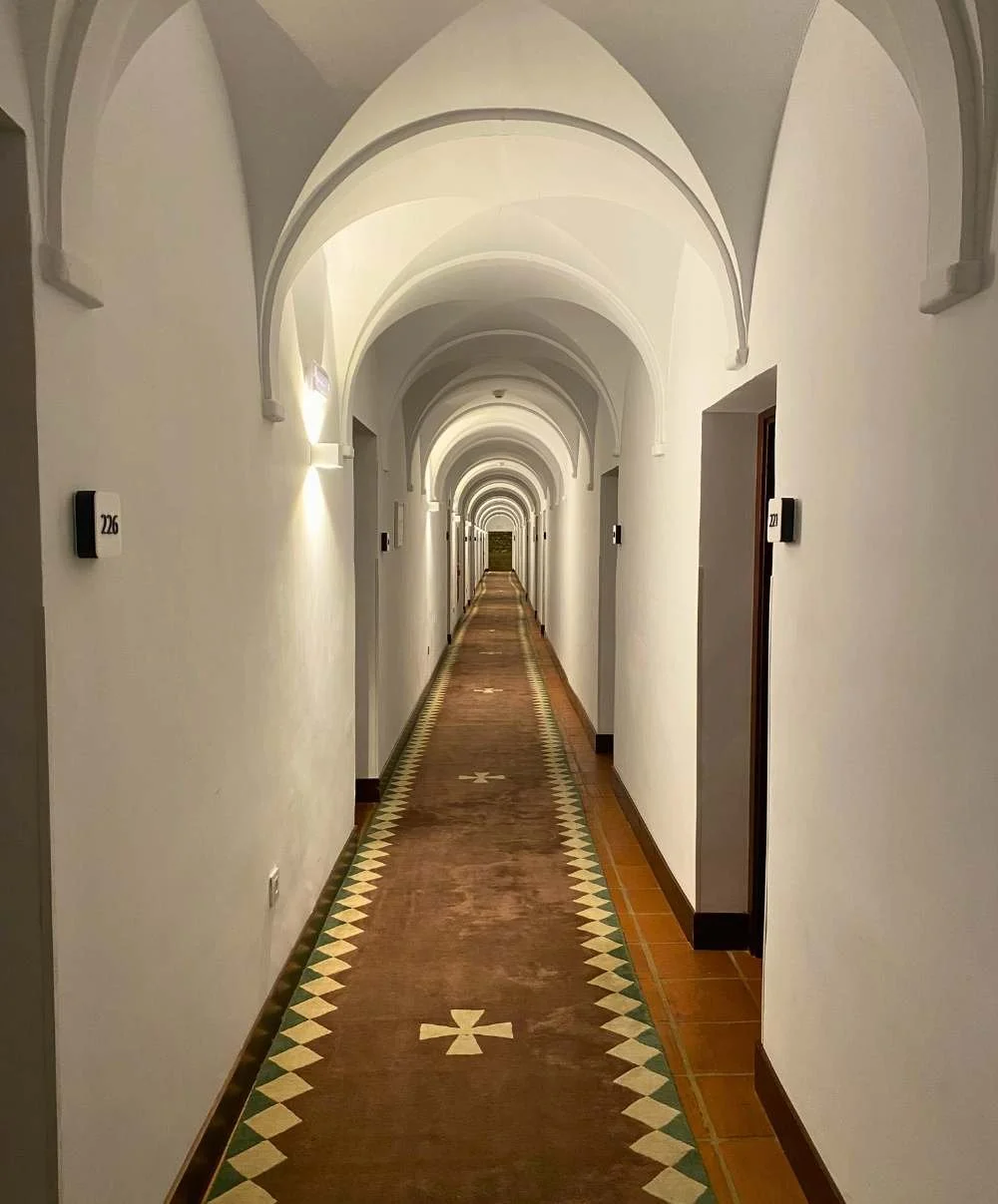
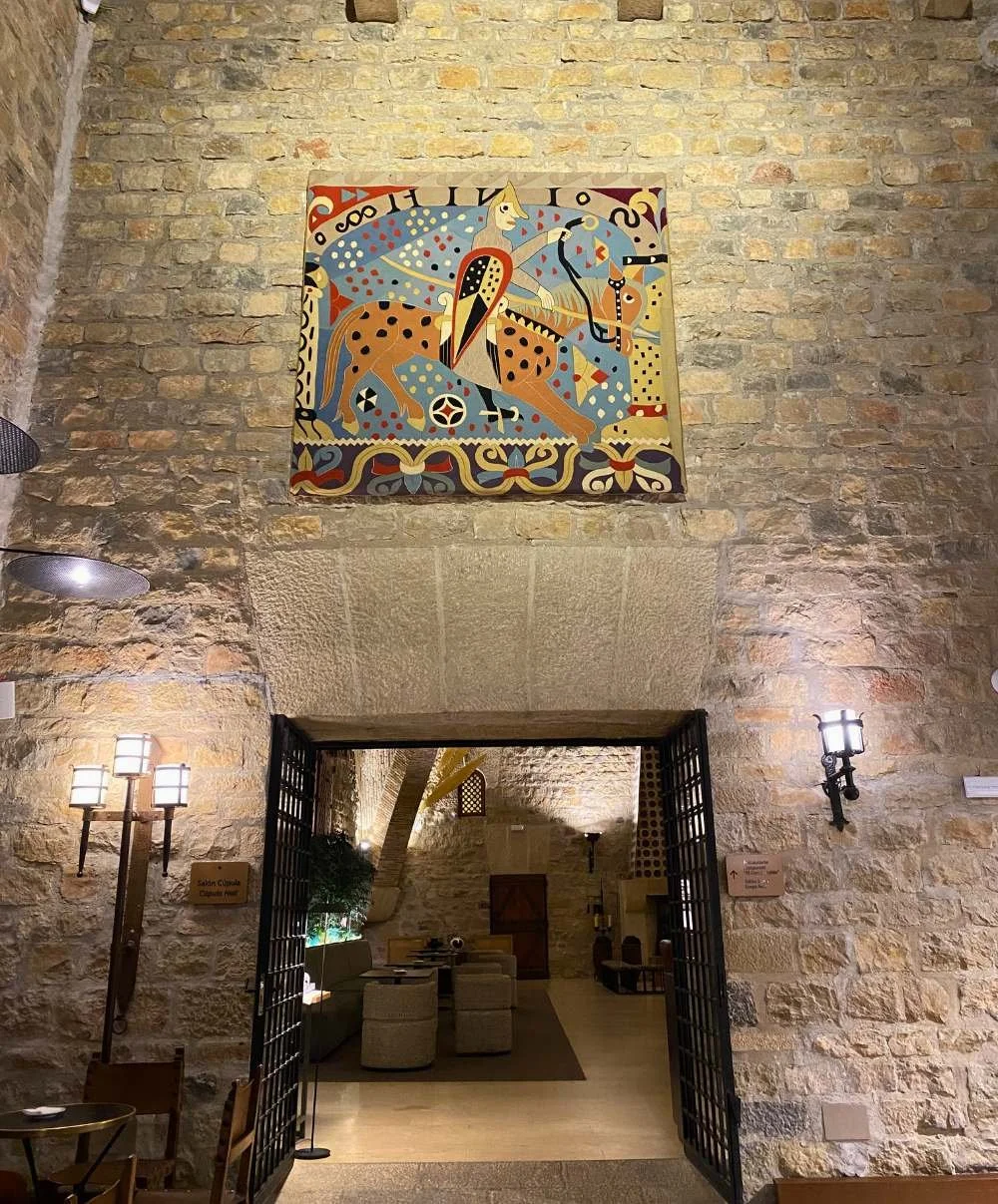
Legend has it that the hotel has a pair of resident ghosts - one that haunts the dining room and temporarily possesses the bodies of guests (yikes!), and another that haunts room 401 in the central tower. If you’re wondering whether you can book this specific room, it seems that you can - and it’s extremely popular.
Tips for visiting: Just alongside the hotel are the remains of the 13th-century part of the complex (the Alcazar Nuevo). I’m not a morning person, but it was totally worth getting up at dawn to walk to the edge of this site and watch the sunrise from the Cross of Santa Catalina. This is the spot where Fernando III raised his cross after conquering Jaén, and it has spectacular views over the city and its Renaissance cathedral.
Check availability at Booking.com
Check availability at Expedia
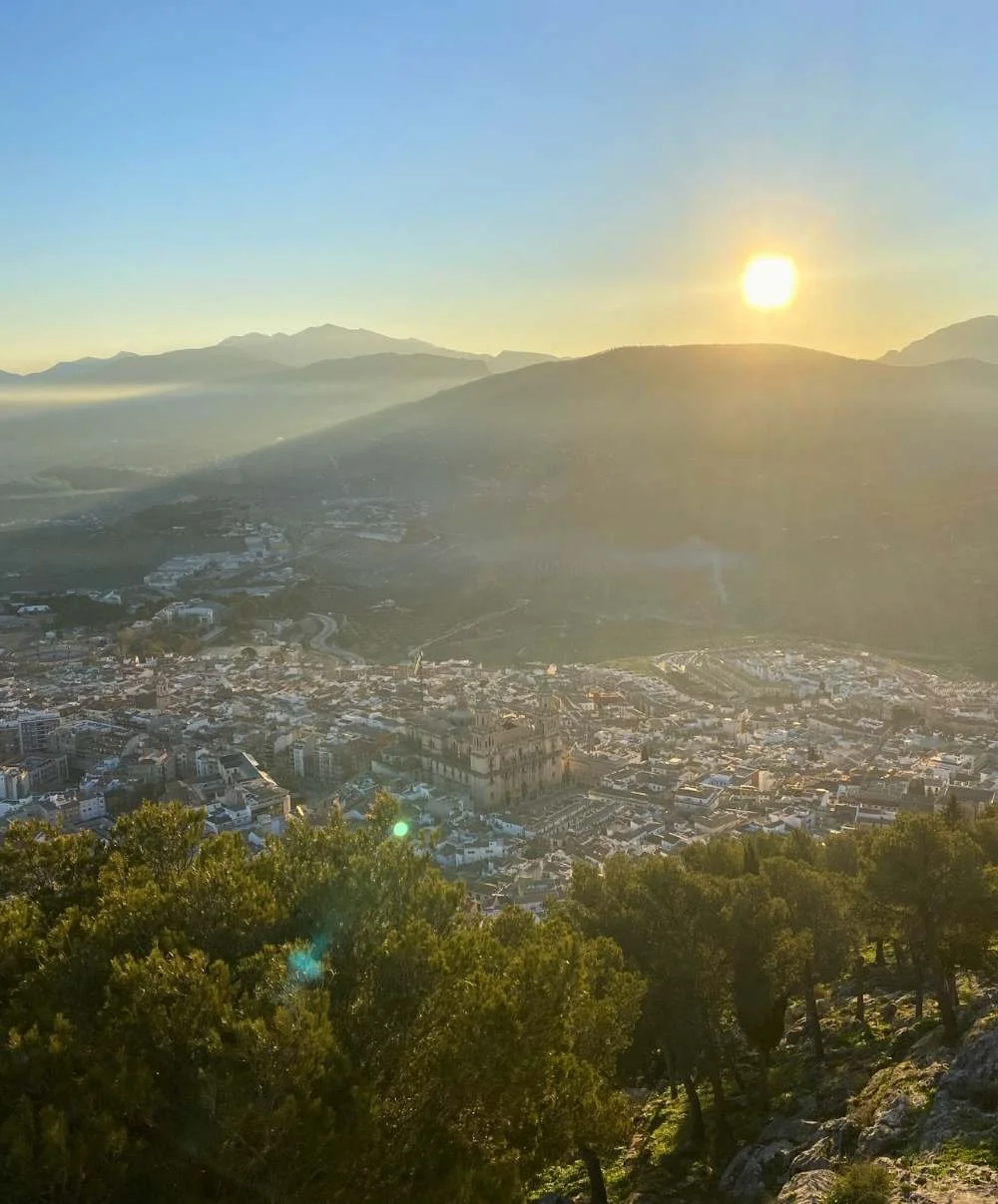
View from the Cross of Santa Catalina, Jaén. Photo © Amy Macpherson
I’ll be adding more places to this list over time, so be sure to bookmark this page or sign up for my newsletter so you don’t miss out on updates!
Find out the best times of year to visit this historic, flower-filled Andalucían city (and the months when you should probably avoid it!)